 © RR Auction
 © RR Auction
 © RR Auction
Enrico Fermi · Tech History
Chicago Pile-1 graphite relic
$393 (9 bids)
History maker· relic level 6 of 6Shop at RR AuctionWe link out and take no commission.
A sliver of the pile where the nuclear age began on 2 December 1942, sealed in acrylic. Material from a defining experiment, but offered with no named provenance. Open at RR until 9 December 2026.
Relic level
How close this object was to the moment history happened. The closer, the rarer it can only become.
- History makerIt was there when history happened.This one
- Founder's ownOwned or used by a defining founder.
- PrototypeA prototype, a first unit or a historic serial.
- SignedSigned, or a numbered limited edition.
- First editionA first generation, kept sealed or complete.
- Official merchOfficial merchandise, no proven rarity yet.
Why is it rare?+
Pieces of CP-1 graphite were given away in the 1960s, according to RR, so this is one of a number of fragments. No count is published, and this piece has no named chain of ownership.
What story does it tell?+
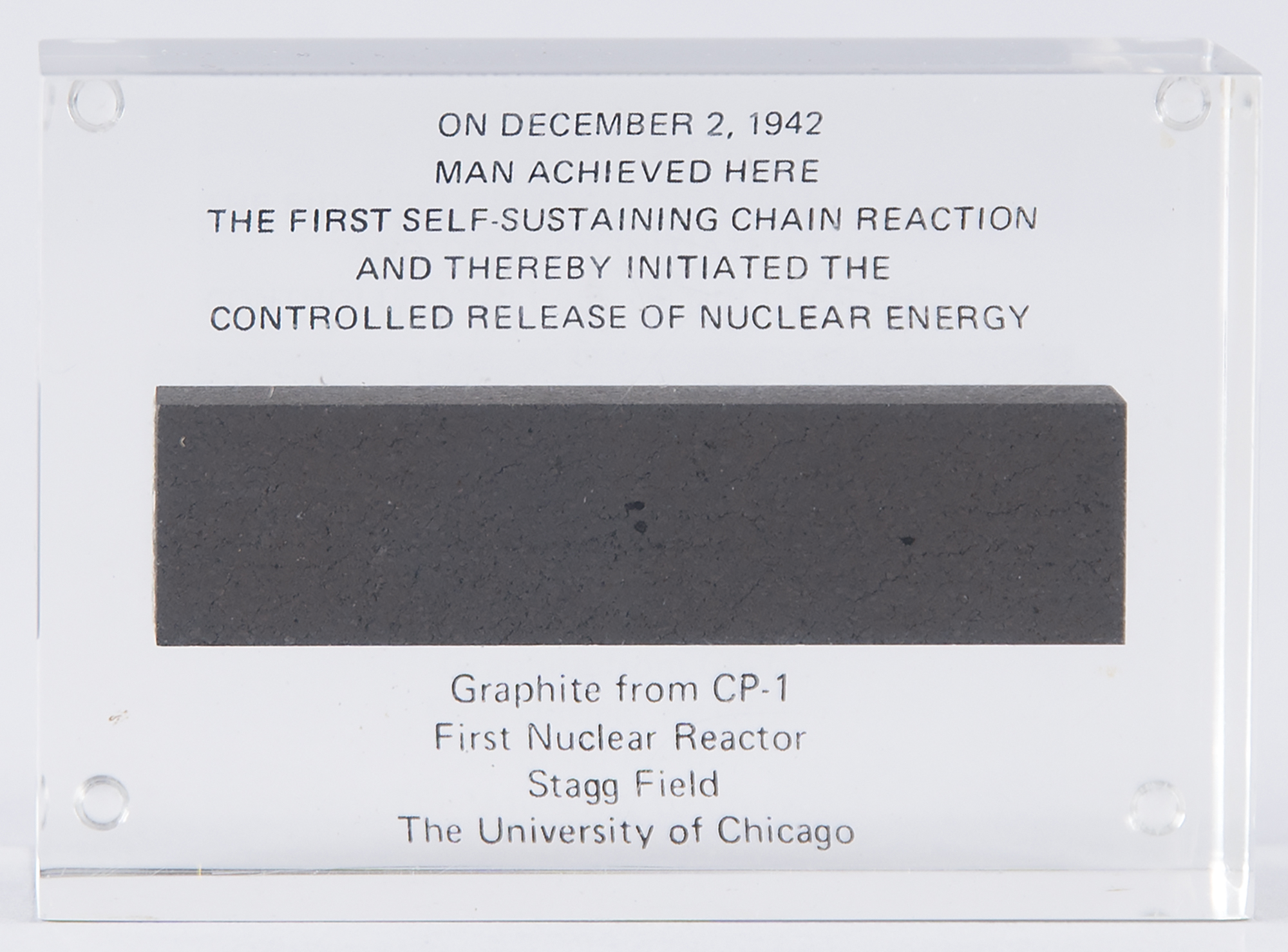
A piece of graphite from Chicago Pile-1, the reactor in which Enrico Fermi's team achieved the first self-sustaining nuclear chain reaction on 2 December 1942, sealed in an inscribed acrylic block.
Why would someone want it in 2050?+
The chain reaction under Stagg Field opened both nuclear power and the bomb. A piece of the pile itself is the most direct physical link to that afternoon, if its origin holds.
The full record+
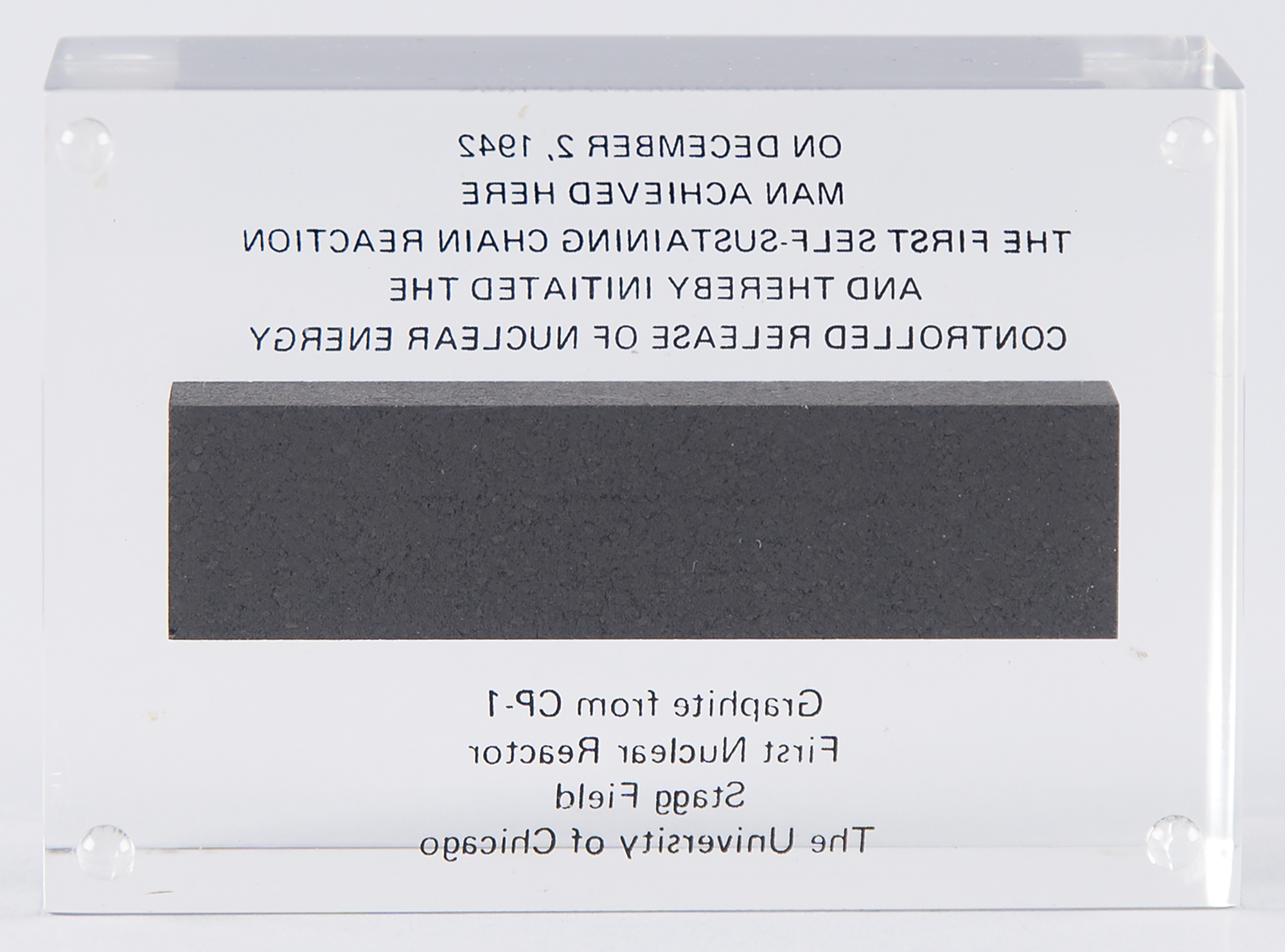
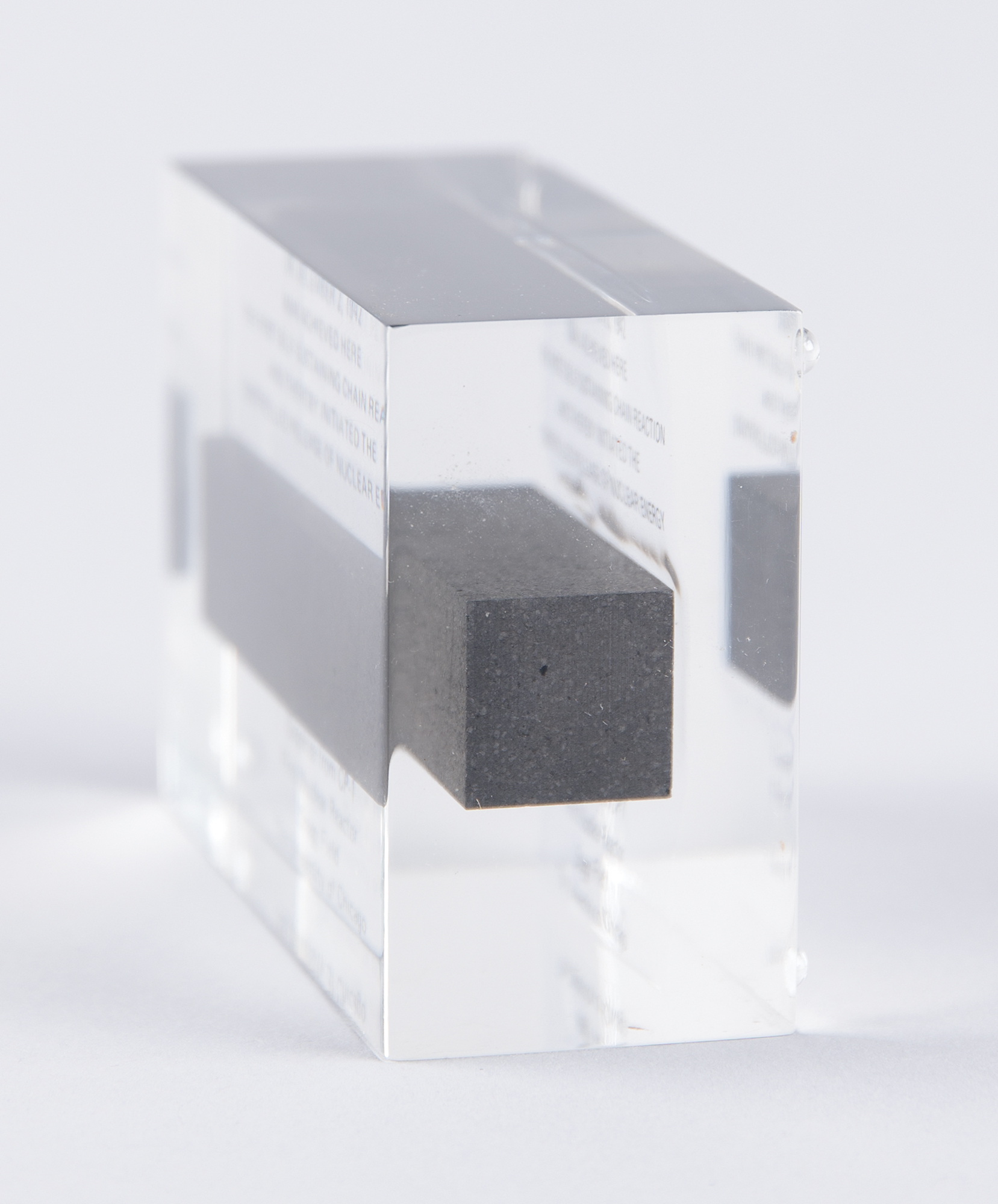
A graphite segment sealed in an acrylic block of about 3.75 by 2.5 by 1.5 inches. The block is inscribed in part "On December 2, 1942, Man Achieved Here the First Self-Sustaining Chain Reaction" and identifies the graphite as coming from CP-1 at Stagg Field, University of Chicago.
RR recounts that Fermi's experiment used uranium fuel and ultra-pure graphite as a neutron moderator, reached criticality at 3:25 PM and ran for 28 minutes. It states that pieces of CP-1 graphite were given to dignitaries and scientists who had worked on the project during the 1960s. The listing names no previous owner and no supporting document. RR describes it as in fine condition.
It is lot 197 of RR Auction's sale 755, estimated at $2,000+. On 25 November 2026 the bid stood at $393 after nine bids.
Every fact is sourced. Sources and uncertainties