 © RR Auction
 © RR Auction
 © RR Auction
 © RR Auction
Oliver Garfield Co. · AI Culture
Geniac No. 1 'Electric Brain' construction kit, 1957
$220 (3 bids)
First edition· relic level 2 of 6Shop at RR AuctionWe link out and take no commission.
A 1957 'Electric Brain' kit with its original box: how the idea of the thinking machine was packaged for the public, long before AI became a product. Live at RR Auction.
Relic level
How close this object was to the moment history happened. The closer, the rarer it can only become.
- History makerIt was there when history happened.
- Founder's ownOwned or used by a defining founder.
- PrototypeA prototype, a first unit or a historic serial.
- SignedSigned, or a numbered limited edition.
- First editionA first generation, kept sealed or complete.This one
- Official merchOfficial merchandise, no proven rarity yet.
Why is it rare?+
Not documented. The Geniac was a standard production kit, and the seller gives no count. A boxed example with its parts and instructions is the thing to look for.
What story does it tell?+
A 1957 kit sold as an 'Electric Brain': a mechanical computer that owners assembled themselves. It shows how the idea of a thinking machine was sold to the public in the 1950s.
Why would someone want it in 2050?+
As early consumer packaging of the idea of machine intelligence, it is a fair piece of AI pre-history. It was a product, not part of research, so its interest is cultural rather than technical.
The full record+
RR Auction lists a Geniac No. 1 'Electric Brain' mechanical computer construction kit of 1957, with its original box, components and instructional material, as lot 244 of its sale 755. The estimate is $1,000+. On 24 November 2026 the bid stood at $220. RR states the sale ends on 9 December 2026.
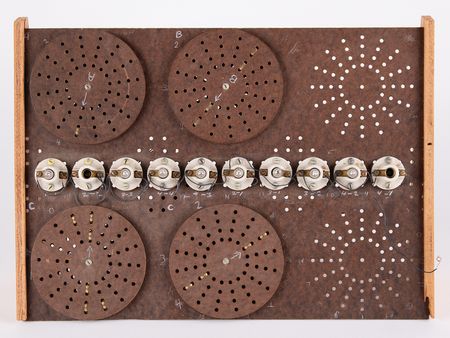
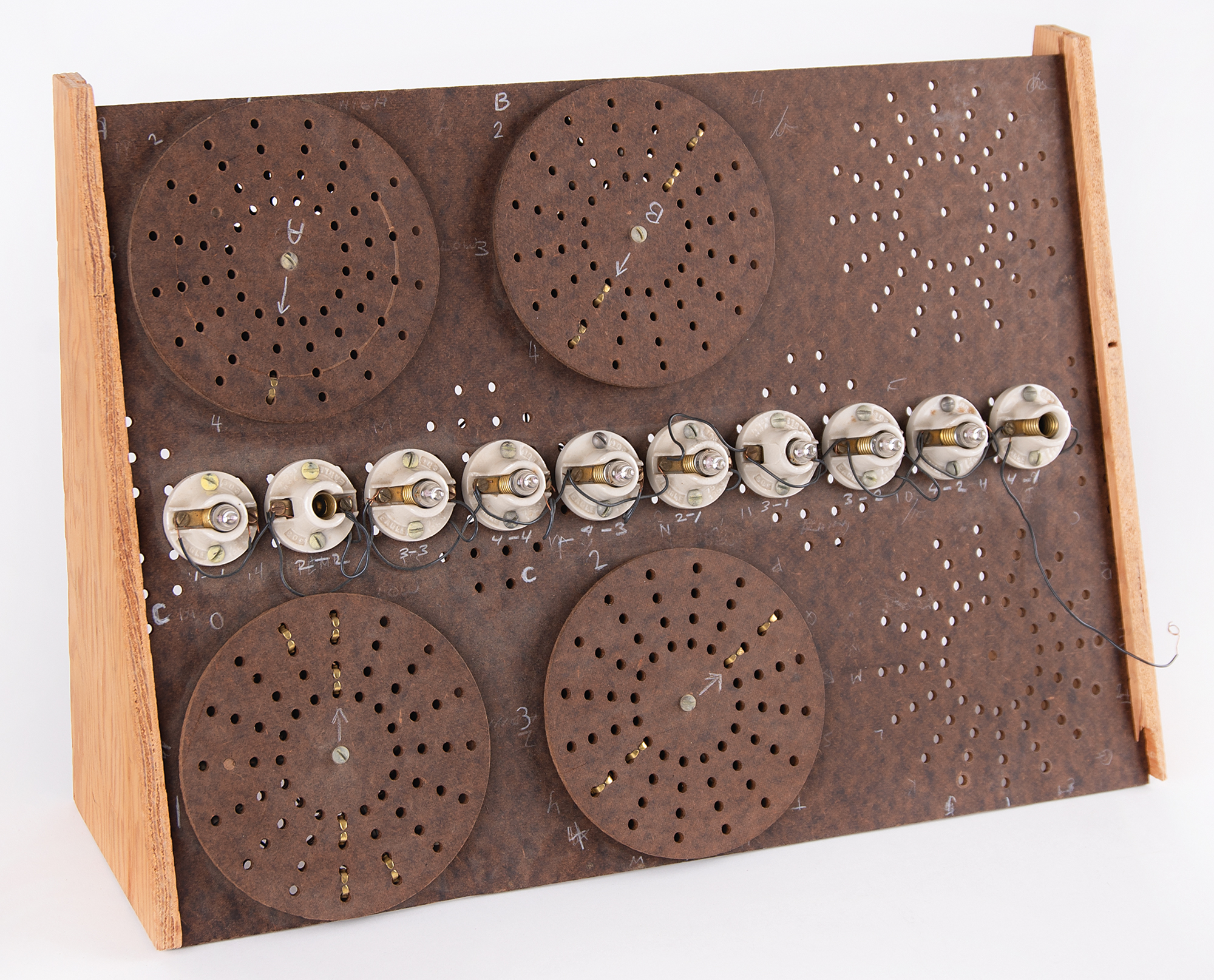
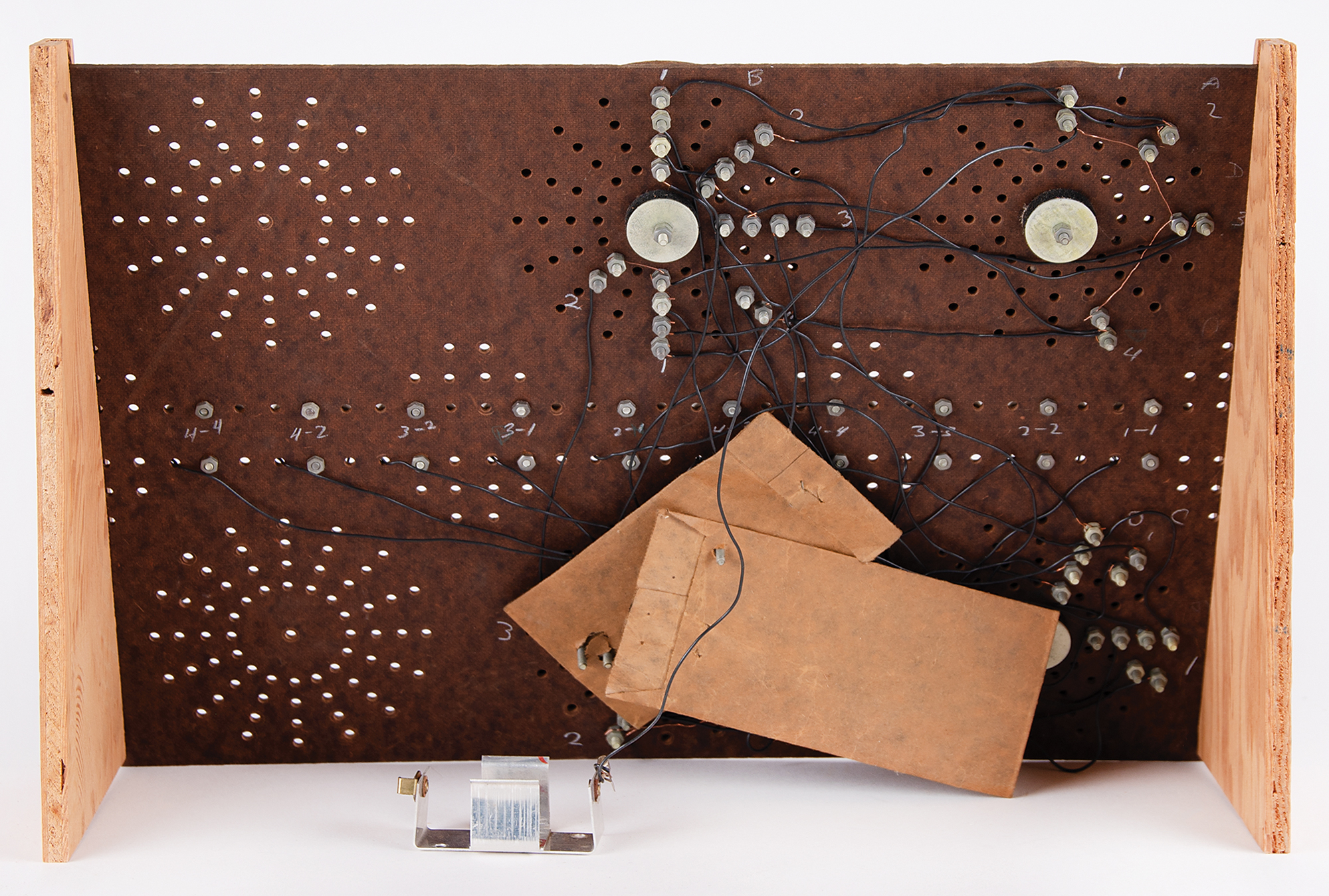
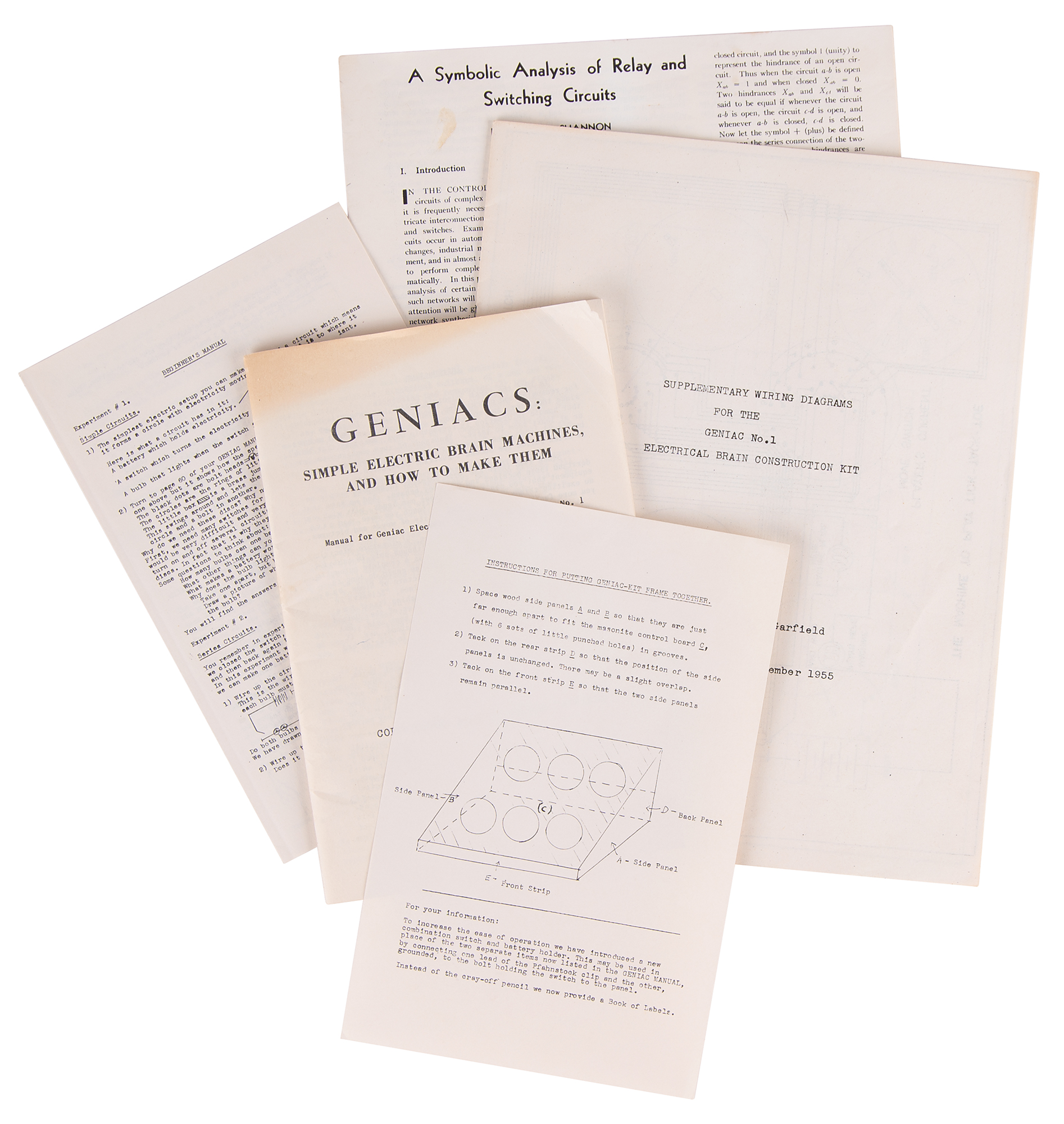
According to the lot description, the kit was distributed by the Oliver Garfield Co. and shipped to a buyer in North Vancouver, British Columbia, under a US postal meter dated 29 January 1957, with Canadian customs paperwork stamped 'Duty Paid'. It is partly assembled: four of the six switching discs are fitted to the perforated Masonite board and two are loose, and there is partial wiring and handwritten working notes. The paperwork includes Oliver Garfield's 1955 booklet, a beginner's manual, a study guide, wiring diagrams and a reproduction of Claude Shannon's 1938 paper on switching circuits.
RR credits the Geniac's design to Edmund C. Berkeley, who introduced it in 1955 as a low-cost kit for home experiments with switching logic.
Every fact is sourced. Sources and uncertainties