Collecting Intelligence24 Nov 20264 min read
Limited edition does not mean valuable
Twenty thousand flamethrowers, thirty thousand perfume bottles, fifty thousand hats, eight hundred hammers and fewer than two hundred graphics cards. Rare, desirable and historic are three different things. Here is how to tell them apart.
The phrase "limited edition" does a great deal of work in technology merchandise, and most of it is marketing. It tells you that someone has decided to stop making a thing. It does not tell you how many exist, whether anyone will want one in twenty years, or whether the object has anything to do with history.
Collectors in older fields learned long ago to keep three ideas apart. We should too.
- Rarity is a number: how many exist, and how many survive in good condition.
- Desirability is demand: how many people want one, and how badly.
- Historical importance is meaning: whether the object took part in, or stands for, something that mattered.
An object needs all three to become a serious collectible. Most limited editions have, at best, one.
The sell-out trap
"Sold out in hours" is the most common claim in this market, and the least informative.
Tesla's Cyberwhistle sold out in under two hours in December 2021, according to InsideEVs. Tesla never said how many were in the batch. OpenAI's Codex Micro sold out in about twelve hours in July 2026. Again, no number was published.
A sell-out measures demand on one day against a supply you have not been told. It is a fact about a launch, not about an object. In the Codex Micro's case Fortune tracked what happened next on resale sites: a peak of $1,250 on day two, $800 to $1,000 in the first week, about $450 by the end of the month. That is the shape of excitement fading, not of scarcity being discovered.
When the number is real
Some drops do come with a real figure. That is a genuine improvement, and it lets you see how differently numbers behave.
| Drop | Year | Documented run |
|---|---|---|
| The Boring Company hat | 2017 | 50,000 (announced cap) |
| Burnt Hair perfume | 2022 | 30,000 bottles |
| Not-a-Flamethrower | 2018 | 20,000 units |
| Ray-Ban Meta × Coperni | 2025 | 3,600 pairs, numbered |
| Tesla Cyberhammer | 2024 | 800, individually numbered |
| Tesla surfboard | 2018 | 200 boards |
| RTX 2080 Ti Cyberpunk 2077 Edition | 2020 | fewer than 200, never sold |
Fifty thousand hats is a documented limit. It is not scarcity. Neither, really, is twenty thousand of anything: the flamethrower is a fine piece of cultural history, but twenty thousand households received one.
The numbers that start to mean something are at the bottom of the table. Two hundred surfboards. Eight hundred hammers, each carrying its own number. Fewer than two hundred graphics cards that NVIDIA gave away rather than sold.
Note too who supplies the number. The Cyberhammer's 800 was stated by Tesla and confirmed by a numbered example. The 30,000 perfume bottles come from Musk's own running tally on social media, relayed by the press. Both are better than nothing. They are not the same quality of evidence.
Desire is not a price
The early resale figures for these drops all have something in common: they are asking prices.
Within days of the Cyberhammer announcement, Carscoops found eBay listings at $2,500, $3,900 and $5,500. After the first flamethrower pickups in June 2018, Fox Business found listings as high as $20,000, with many at $2,000 to $3,000. Surfboards appeared at $2,000 to $5,000.
None of these is a confirmed sale. A listing records what one seller hoped for on one day. When a confirmed figure does exist, it is often lower, and it moves. Two signed Musk dollar bills sold at the same auction house five months apart in 2022 and 2023: one for $19,663, the next for $4,654.
Where history comes in
The third quality is the one marketing cannot manufacture.
The Cyberhammer is interesting not because it is limited but because it points at a specific moment: the window demonstration at the 2019 Cybertruck reveal, which Tesla itself chose to recall. It is a commemorative object, and it is honest about what it commemorates.
The Not-a-Flamethrower matters for a different reason. It was the drop that showed a founder could sell twenty thousand of a joke product in a week. Every celebrity-founder drop since has followed its template. It is a historical object as a piece of marketing history, even though it is not scarce.
By contrast, a seasonal edition of a figurine, or a renamed colourway of an existing product, has a limit and possibly demand, but nothing to say.
A short test
Before treating any "limited edition" as a collectible, ask:
- Who says how many? The maker, in writing, before the sale? A number on the object itself? Or a phrase on a product page that could be reissued next season?
- Is the number small enough to matter? Hundreds behave very differently from tens of thousands.
- Is there a sale, or only a listing? Look for completed auction results with the price type stated.
- What does it stand for? If you cannot name the moment, person or turning point it marks, it is merchandise.
- Could the maker simply make more? A cap the company can lift is not a limit.
Most objects fail at least two of these. That is fine. Not everything needs to be a relic. But on this site, the difference decides where an object is filed: a numbered run with a documented size can reach tier C; a well-sold piece of merchandise with no limit stays at tier E, however fast it sold out.
Keep reading
Buy & Preserve24 Nov 20264 min read
A relic you cannot switch on
The Humane Ai Pin went from $699 launch to electronic waste in fifteen months. It is the best lesson available in what makes an AI device possible to keep.
 Photo: NVIDIA
Then vs. Now24 Nov 20264 min read
Is the DGX Spark the Apple-1 of the AI generation?
One was soldered by hand in a garage and sold through a single shop. The other is on the shelf at Best Buy. The comparison is still worth making, as long as you make it honestly.
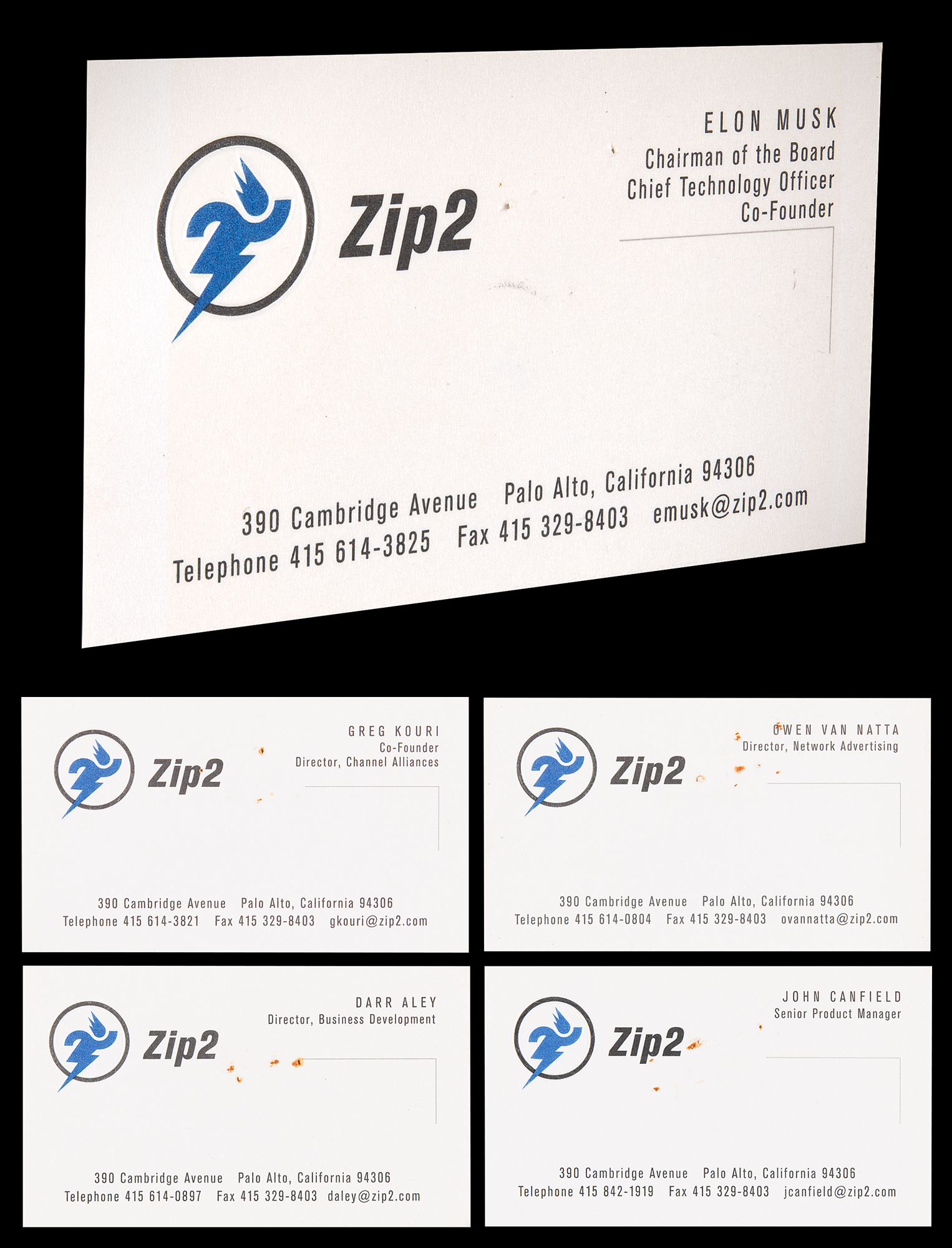 Photo: RR Auction
The Rookie Years24 Nov 20264 min read
What is the Elon Musk equivalent of a rookie card?
It exists, it has sold, and it went for $6,380. The stranger finding is what has never come to market at all.