Rare Drops24 Nov 20265 min read
The year the AI labs discovered merch
A baseball cap you could not buy, a basketball that sold out, a keypad gone in twelve hours. In 2026 the companies building AI started making objects, and a resale market formed around them within days.
 Photo: OpenAI Supply Co.
For most of their short history the AI labs made nothing you could hold. Their product was a text box. Whatever physical culture they had lived inside the office: a hoodie for a launch, a card for a milestone, a folding chair with a logo on it.
That changed over about twelve months, and it changed in a way collectors should pay attention to, because it produced the first objects of the AI era that ordinary people could own and that the companies themselves had made.
The cap you could not buy
It started with something that was never for sale.
In October 2025 Anthropic took over a newsstand in New York's West Village and called it a "Zero Slop Zone". Visitors got free coffee and a baseball cap embroidered with one word: thinking. Anthropic said more than 5,000 people came. Business Insider reported that the organisers ran out of caps. A second pop-up in London that November ran out by lunchtime on its second day, according to the New Statesman.
Anthropic has never sold the cap, and we found no official Anthropic merchandise store. The only way to get one was to be there.
By the following summer Forbes was reporting them on eBay at $50 to $100. That is a small number. It is also an infinite return on an object that cost nothing, and the first clear signal that people would pay for a physical token of an AI lab.
The shop
OpenAI's response was a shop.
OpenAI Supply Co. had existed for some time as an internal store. Its own About page says it began as a small set of employee merchandise, and that some items became symbols inside the company: collectible cards, blue folding chairs, graphic hoodies. In mid-July 2026 it opened to the public.
The launch range was ordinary on paper. Socks at $15. Hats at $40. A quarter-zip marked "research" at $175. And a tie-dye basketball at $70, which was strange enough that TechCrunch ran a piece asking why OpenAI was selling a basketball.
By early August, the trade press reported that every item had sold out.
The first hardware
One product from that launch deserves to be separated from the socks.
The Codex Micro is a $230 keypad, made with the keyboard company Work Louder, for controlling OpenAI's coding agents: keys to accept and reject, a dial for how hard the model should think. Fortune called it OpenAI's first hardware device. It sold out in about twelve hours and, Fortune reported, OpenAI did not plan to make more.
The resale figures Fortune collected are the best-documented price curve the category has: $1,250 at the peak on the second day, $800 to $1,000 in the first week, about $450 by the end of the month.
Read that curve carefully. It is a fivefold spike followed by a loss of more than half within a fortnight. That is how a sold-out drop behaves. It is not how a collectible behaves, at least not yet.
The exclusive that became a product
The pattern repeated in the autumn with a twist.
At its developer conference on 29 September 2026, OpenAI gave attendees a transparent edition of ModRetro's Chromatic handheld, set up so that its coding model could write small games and load them onto a cartridge. It was an event exclusive: you had to be in the room.
Six weeks later, on 9 November, OpenAI released a public Codex Edition of the same console at $200, with what its own page calls a new look. One report said the first batch was gone within a day.
For a collector this is a neat case study, because it creates two objects that look related and are not equivalent. One was given to a limited audience on a specific date. The other can be bought by anyone, in batches, for as long as OpenAI chooses to make it. Any price difference between them should rest on that distinction, and on being able to prove which one you have.
The archive
The most interesting page on OpenAI's shop is not the shop. It is the archive: a grid of roughly 160 retired items with no prices and no dates.
Among them is a series of collectible cards, one per product milestone: Sora, Sora 2, Imagegen, GPT-5, and a "Booster Pack". These are the objects the About page describes as having mattered inside the company. They were made for employees, not for sale.
We can say they exist, because OpenAI lists them. We cannot say how many were made, when, or who received them, because OpenAI does not say. That gap is the entire difficulty of collecting this material.
How to read all this
Three distinctions do most of the work.
Sold, given, or awarded. A basketball anyone could buy for $70 is merchandise. A cap handed out at a pop-up is an event exclusive. A plaque given to a developer for passing ten billion tokens, as Business Insider reported OpenAI did at its 2025 conference, is an award with a name attached. These are different kinds of object, and in every mature collecting field they are priced differently.
Stated limits versus sold-out. None of the items above came with a published edition size. "Sold out in twelve hours" tells you about demand on one day. It tells you nothing about supply. A company can restock, reissue or produce a public version whenever it likes, and one of them just did.
Employee material is the deep end. The objects most likely to matter in thirty years are the ones made for staff before anyone outside was paying attention. They are also the hardest to authenticate, since there is no receipt and no public record. If you are offered one, the provenance is the object.
What we are watching
Whether any of these companies publishes an edition number. Whether the DevDay console and the public console hold different prices six months from now. And whether Anthropic ever sells the cap, which would be the quickest way to find out how much of its appeal was that you could not buy it.
It is tempting to dismiss all of this as branded socks. Most of it is. But the first objects of every technology era looked trivial at the time, and the ones that turned out to matter were the ones somebody could document.
Keep reading
Buy & Preserve24 Nov 20264 min read
A relic you cannot switch on
The Humane Ai Pin went from $699 launch to electronic waste in fifteen months. It is the best lesson available in what makes an AI device possible to keep.
 Photo: NVIDIA
Then vs. Now24 Nov 20264 min read
Is the DGX Spark the Apple-1 of the AI generation?
One was soldered by hand in a garage and sold through a single shop. The other is on the shelf at Best Buy. The comparison is still worth making, as long as you make it honestly.
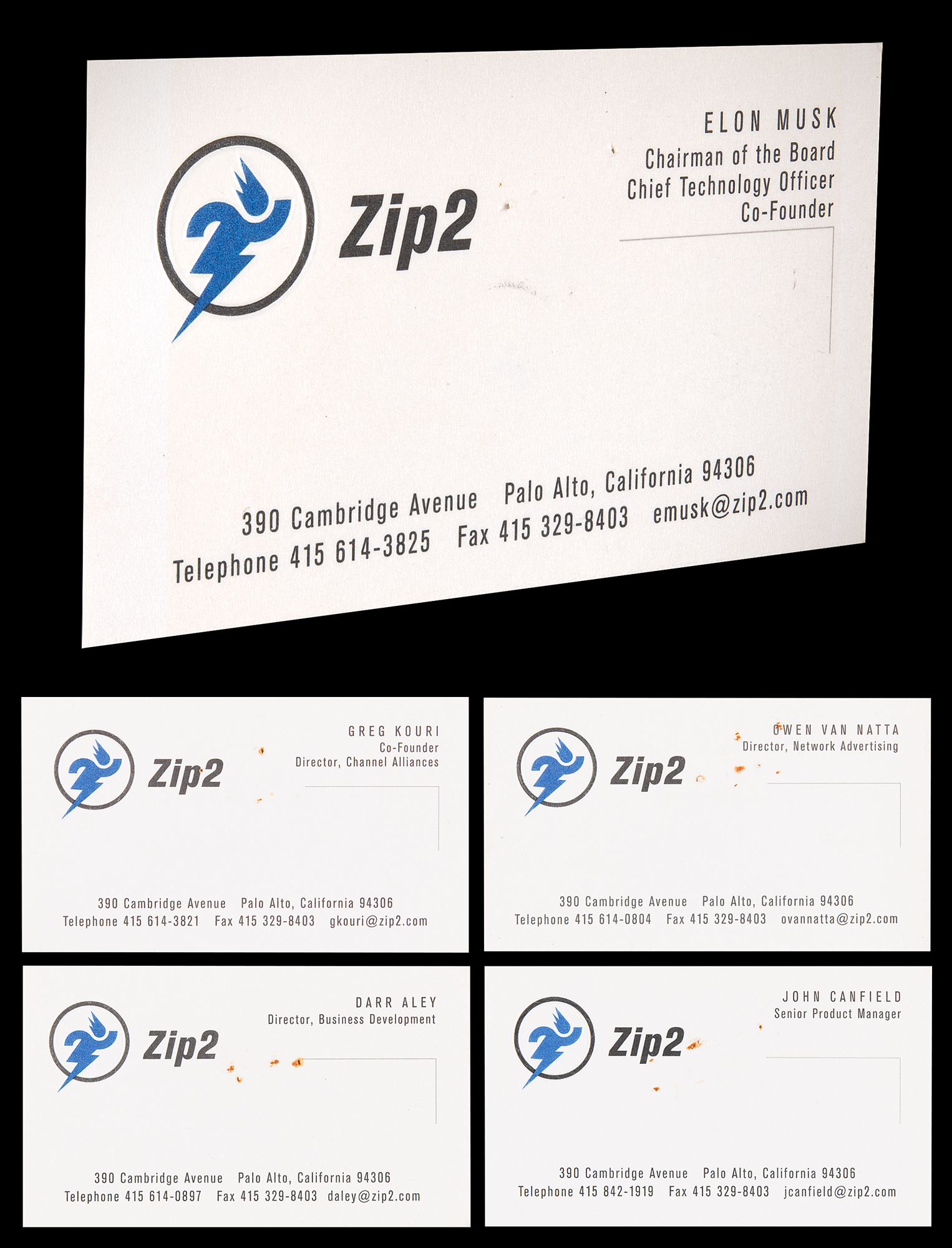 Photo: RR Auction
The Rookie Years24 Nov 20264 min read
What is the Elon Musk equivalent of a rookie card?
It exists, it has sold, and it went for $6,380. The stranger finding is what has never come to market at all.