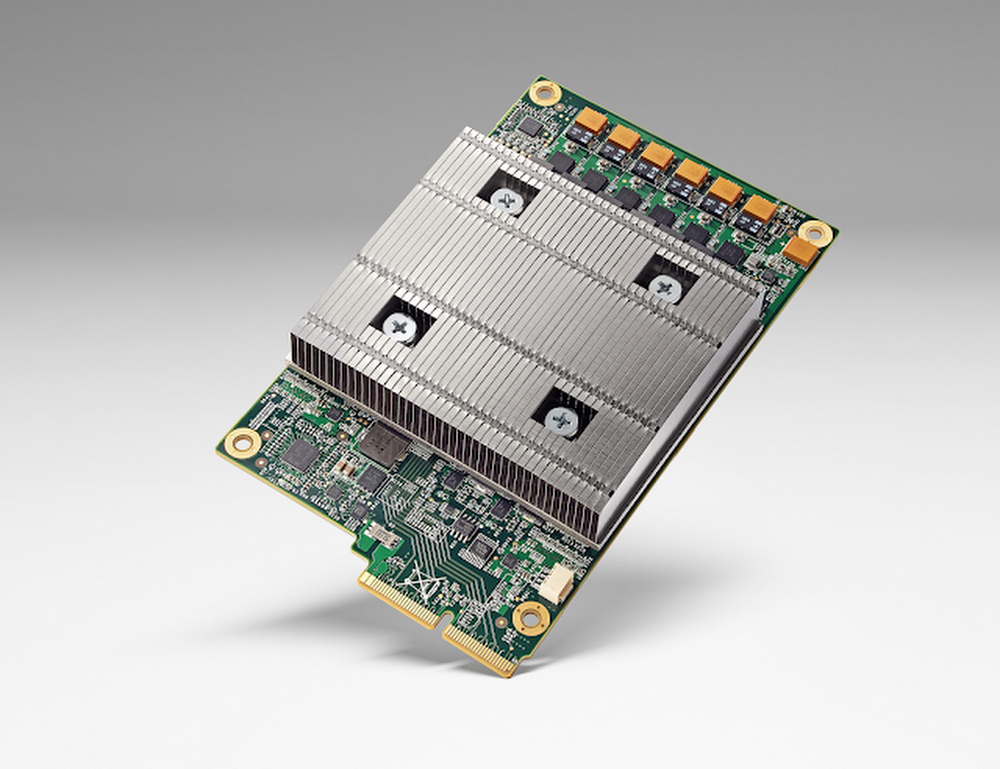
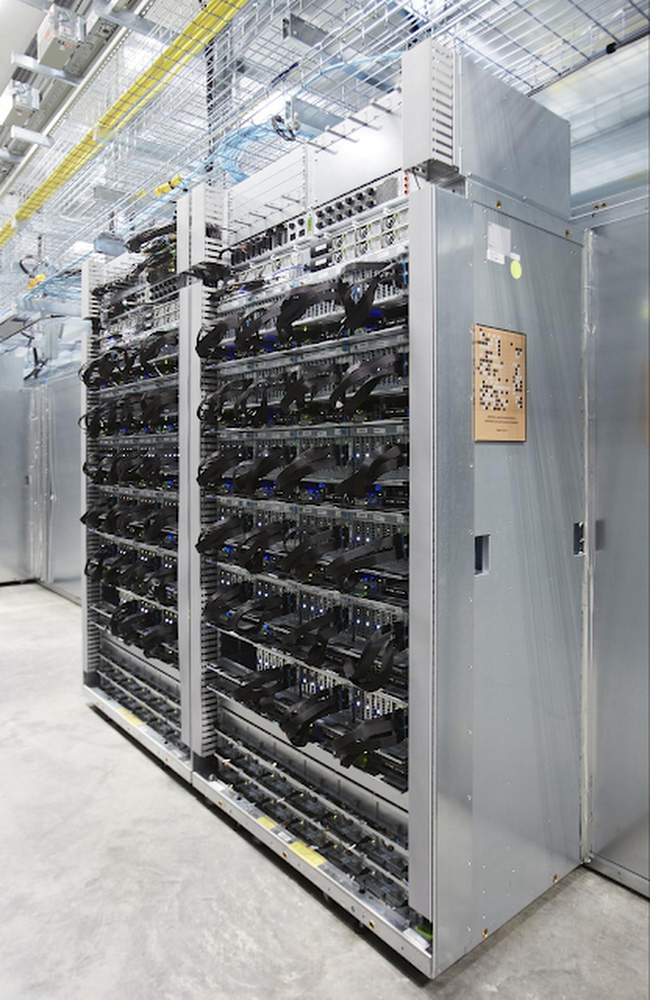
Google Tensor Processing Unit, first generation
Google built more than 100,000 of its first AI chip and sold none of them. It is the clearest case of AI hardware that mattered and left nothing for anyone to collect.
- Maker
- Year
- 2015
- Category
- AI Hardware
No public price
Not for sale · Google (cloud access only)
Relic Score
How we scoreA landmark of AI hardware, known through a single maker retrospective. Never sold, and no example is documented outside Google.
The three questions we ask of every object
- Why is it rare?
- Google says it built more than 100,000 of the first generation and sold none. The restriction is total: no board is documented outside Google, in a museum or in private hands.
- What story does it tell?
- The other half of the AI hardware story. Google kept its chips and rented out the computing, and by its own account the first generation supported AlphaGo, Search and Ads.
- Why would someone want it in 2050?
- As the first of Google's own AI chips, if one ever leaves the company with documentation. The likelier route is a corporate gift to a museum, and there is no sign of that yet.
The record
DocumentedGoogle's first Tensor Processing Unit was an inference chip, deployed inside the company in 2015 and revealed publicly at Google I/O in 2016.
In Google Cloud's ten-year retrospective, published on 31 July 2024, a Google engineer says the company 'ended up building over 100,000' of the first generation to support Ads, Search, speech, AlphaGo and self-driving work.
Later generations added training (v2, with the first 256-chip pod), liquid cooling (v3) and optical circuit switching (v4). Cloud TPUs were first offered to outside customers in early 2018.
TPUs have never been sold as hardware. They are available only inside Google and through Google Cloud. We found no museum holding and no public sale of a TPU board.
Why it matters
Editorial viewThe TPU is the other half of the AI hardware story. NVIDIA sold its chips, so they can be bought, signed, photographed and auctioned. Google kept its chips and rented out the computing. By Google's own account the first generation supported AlphaGo, among much else, and not one board is known to be outside the company.
That is the precedent it sets for today's objects, and it is a negative one. Much of the hardware that matters most in this era is proprietary and will never be offered. It explains why AI hardware collecting is, so far, almost entirely an NVIDIA field: not because NVIDIA's machines are the only important ones, but because they are the ones that were sold.
If a first-generation TPU does become a documented object, the likelier route is the one IBM's Watson took: a corporate gift to a museum. We found no sign that this has happened.
Rarity
DocumentedGoogle says more than 100,000 first-generation TPUs were built. None is known to have been sold, and none is documented in a museum or in private hands.
What to look for
- 01A documented release by Google. TPUs were never sold, so a board in private hands needs a written explanation of how it left the company.
- 02The generation. The inference-only TPU deployed in 2015 is the first; later versions added training, liquid cooling and optical switching.
- 03A museum accession. If Google places a first-generation board in a public collection, that example becomes the reference for everything else.
Where it stands
- Google (cloud access only) ↗
TPUs are not sold as hardware. They are available only inside Google and through Google Cloud.
Not for saleChecked 24 Nov 2026
Asking prices and stock are as observed on the date shown and change without notice. Future Relics does not sell these objects and currently earns no commission on these links.
What we could not confirm
Everything here comes from one Google Cloud article. A search found no museum holding, at the Computer History Museum or the Smithsonian, of a TPU or of AlphaGo hardware. We collected no sourced information on preservation.
Sources
- [1]Google Cloud: TPU transformation, 10 years of AI-specialised chips (31 Jul 2024) · cloud.google.com ↗
- [2]Computer History Museum press release: IBM Watson server donation (20 Nov 2014) · computerhistory.org ↗
Record opened 24 Nov 2026 · Last verified 24 Nov 2026
More from Google
Company file →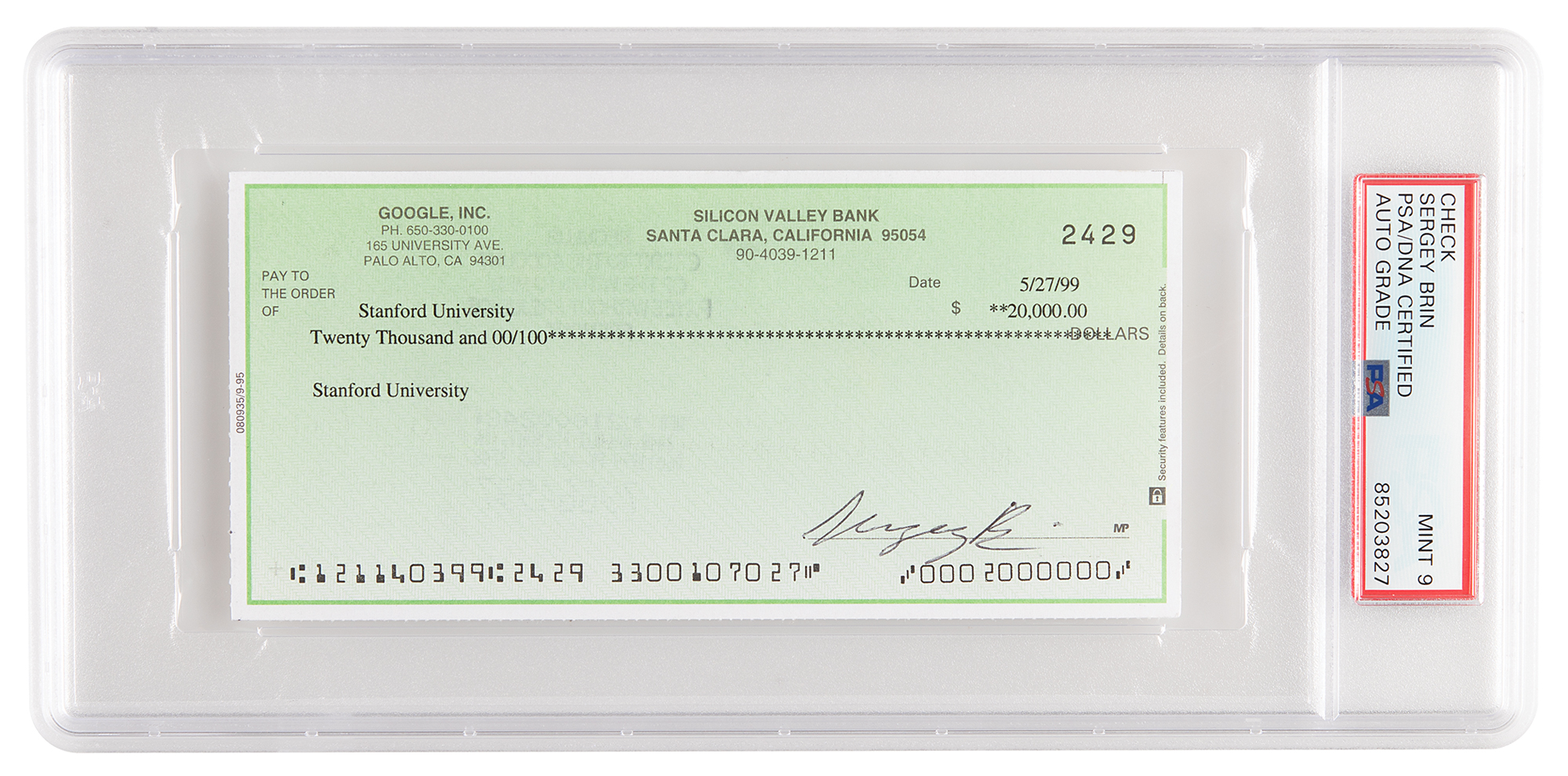 Photo: RR Auction
Sergey Brin signed Google cheque to Stanford, 1999
Google · 1999$5,000
Incl. premium · RR Auction · 20 Mar 2025