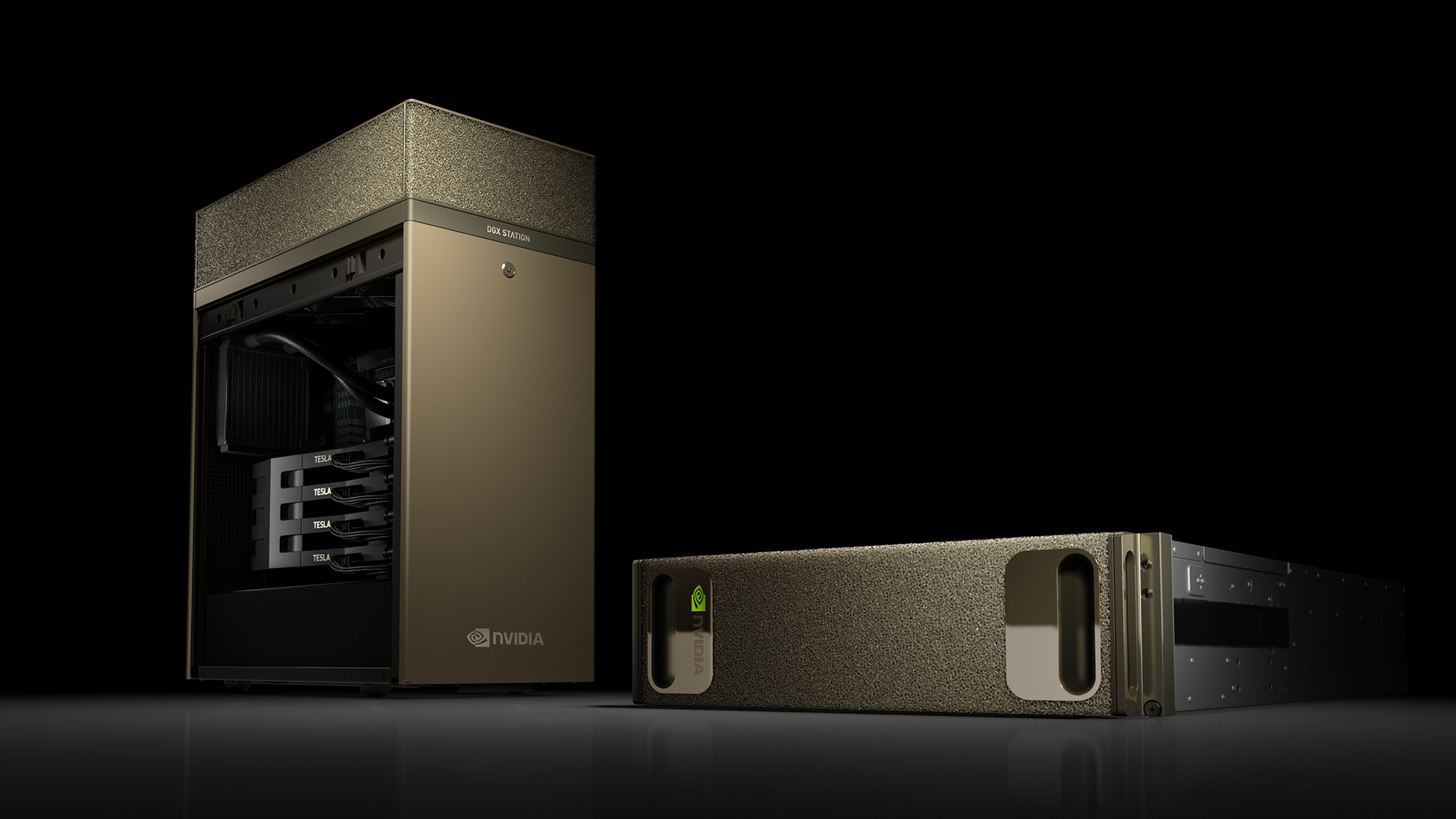
 Photo: NVIDIA
Photograph © NVIDIA. Original ↗
NVIDIA DGX Station (2017)
The first time NVIDIA put the DGX name beside a desk instead of inside a rack. It is the missing step between the DGX-1 and the DGX Spark, and almost nothing about individual units is on record.
- Maker
- NVIDIA
- Year
- 2017
- Category
- AI Hardware
nearly $100,000 (reported)
Status unverified · OEM or integrator listing, as reported by Tom's Hardware
Relic Score
How we scoreA real step in the DGX line, documented by one maker press release. No price, no numbers and no sale on record.
The three questions we ask of every object
- Why is it rare?
- It is not known to be. NVIDIA has published no production figures and no early unit is documented. A particular example would need a tie to a named lab, person or result.
- What story does it tell?
- The first time NVIDIA put the DGX name beside a desk, in May 2017: the step between the rack-bound DGX-1 and the DGX Spark.
- Why would someone want it in 2050?
- Probably few will, unless someone is showing the DGX line in order. A unit documented in a laboratory that produced a known result would change that.
The record
DocumentedNVIDIA announced the first DGX Station on 10 May 2017, alongside Volta-based versions of the DGX-1. Its press release described a personal AI supercomputing workstation designed to sit beside a desk, called it 'the world's quietest workstation' and claimed the computing capacity of 400 CPUs. Both systems could be ordered at the announcement and were expected to ship in the third quarter of 2017. The release gives no price.
The name returned in 2026 on a tower built around NVIDIA's GB300 Grace Blackwell Ultra chip. A Tom's Hardware headline reports one such system listed online for nearly $100,000. We could read only the headline, not the article.
We found no production figures, no documented early units and no sale of a 2017 DGX Station as a collectible.
Why it matters
Editorial viewThe DGX Station is the middle step between the DGX-1, which needed a data centre, and the DGX Spark, which needs a wall socket. In 2017 NVIDIA argued that a researcher should have a deep learning machine within arm's reach, and sold the idea on the one thing an office cares about: noise.
The precedent it sets for today's objects is about lineage, not rarity. The Spark borrowed its launch ceremony from the DGX-1 and its premise from this machine. Anyone trying to show the DGX line in order needs one, and will find that nobody has yet treated it as worth documenting.
That neglect is also its limit. Nothing in our sources ties any surviving unit to a person, a lab or a result, and even its original price and specification could not be confirmed on a page we read.
Rarity
Not documentedNot published. NVIDIA has given no production or shipment figures for the 2017 DGX Station or for the later machines that reuse the name.
Classification
- First Edition
EvidenceThe first DGX Station, announced on 10 May 2017 per NVIDIA's press release.
What to look for
- 01The 2017 original, not a later generation. The name has been reused, most recently on the 2026 GB300 tower.
- 02Purchase paperwork from 2017 or 2018 that names the buyer. A workstation from a known lab has a story; an anonymous one is surplus equipment.
- 03The original order documents showing the factory configuration. We could not confirm the specification on a page we read, so do not rely on a seller's spec sheet alone.
- 04A complete, unmodified system that is shown running.
Where it stands
- OEM or integrator listing, as reported by Tom's Hardware ↗
Refers to the 2026 GB300 generation, not the 2017 original. Only the headline could be read; seller, date and configuration were not confirmed. No verified offers of 2017 units were collected.
nearly $100,000 (reported)Status unverifiedChecked 24 Nov 2026
Asking prices and stock are as observed on the date shown and change without notice. Future Relics does not sell these objects and currently earns no commission on these links.
What we could not confirm
The widely quoted $69,000 price and four Tesla V100 GPUs of the 2017 DGX Station were seen only in search results, not on a page we could read, so neither is stated above. The launch date, specification and official pricing of the 2026 GB300 model were not confirmed either.
Sources
- [1]NVIDIA press release: new Volta-based DGX systems (10 May 2017) · nvidianews.nvidia.com ↗
- [2]Tom's Hardware: GB300-powered DGX Station listed for nearly $100,000 online (headline only) · tomshardware.com ↗
- [3]NVIDIA Blog: DGX Spark early deliveries (Oct 2025) · blogs.nvidia.com ↗
Record opened 24 Nov 2026 · Last verified 24 Nov 2026
More from NVIDIA
Company file →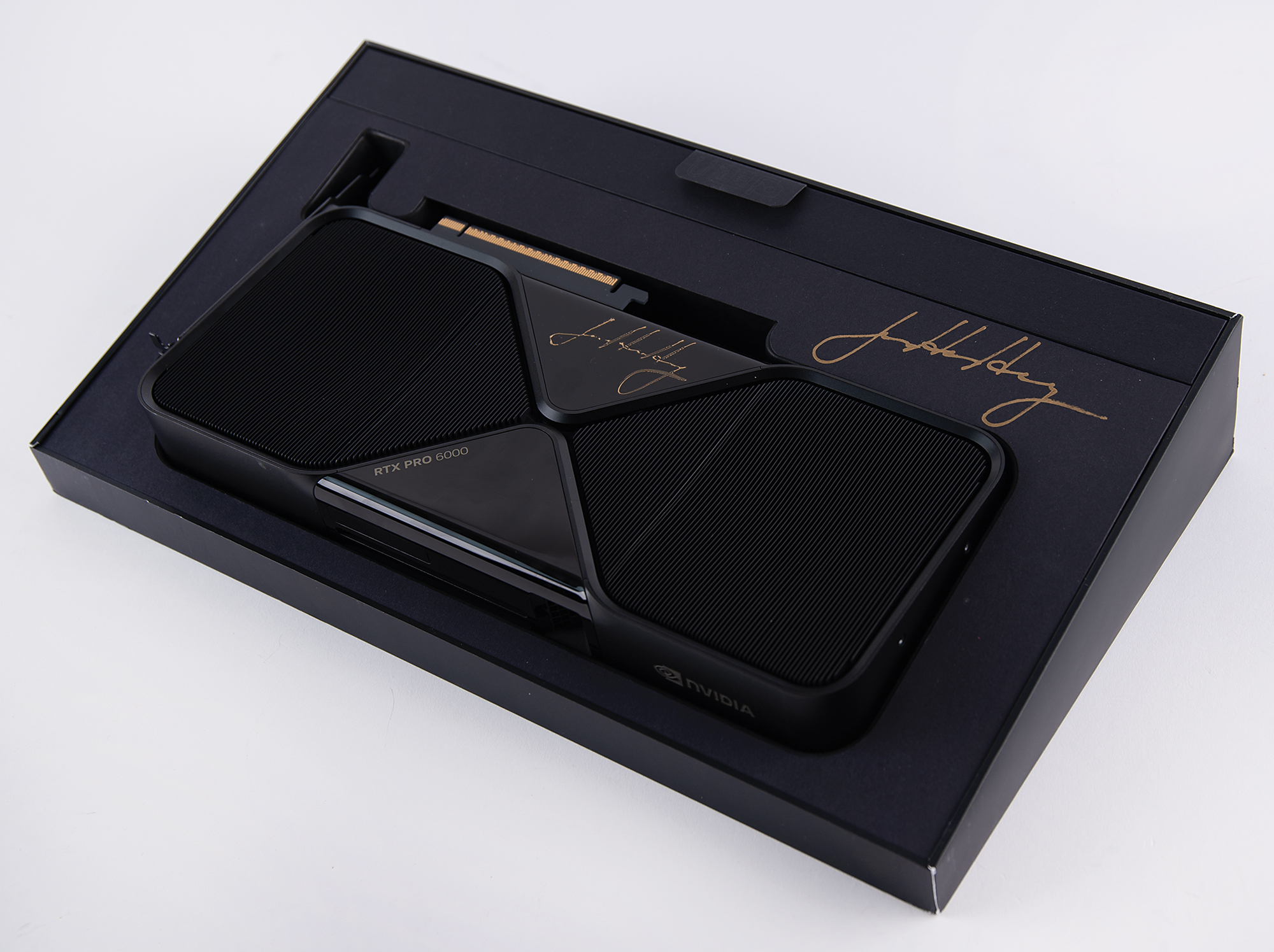 Photo: RR Auction
Jensen Huang twice-signed RTX Pro 6000 Blackwell
NVIDIA · 2026$57,450
Incl. premium · RR Auction · 20 Aug 2026
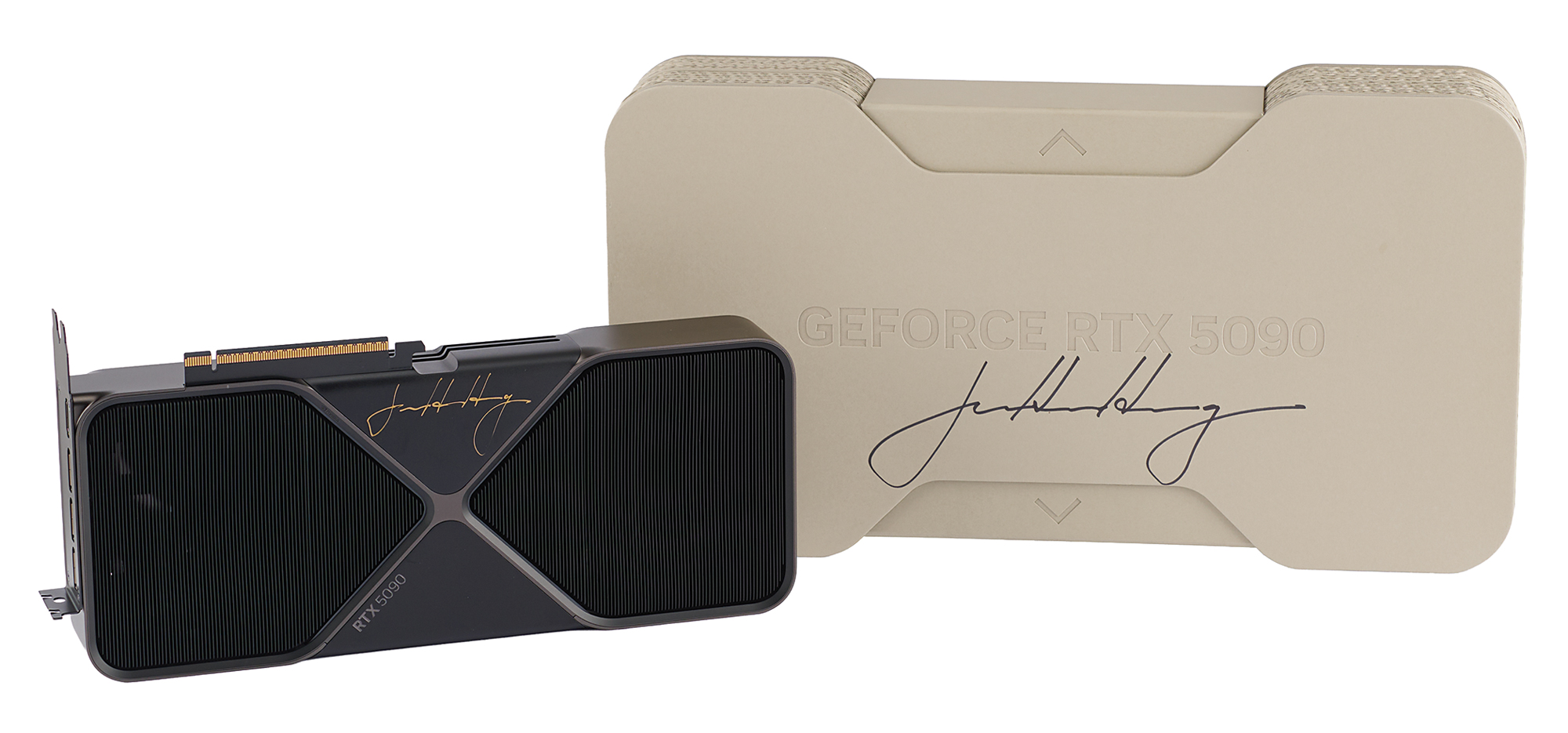 Photo: RR Auction
Jensen Huang signed GeForce graphics cards
NVIDIA$12,501
Incl. premium · RR Auction · 29 Jan 2026
 Photo: RR Auction
Jensen Huang signed photograph
NVIDIA$1,169
Incl. premium · RR Auction · 20 Aug 2026
 Photo: Sotheby's
Jensen Huang worn and signed Tom Ford leather jacket
Tom Ford · 2023$960,000
Reported · Sotheby's · 17 Jul 2026