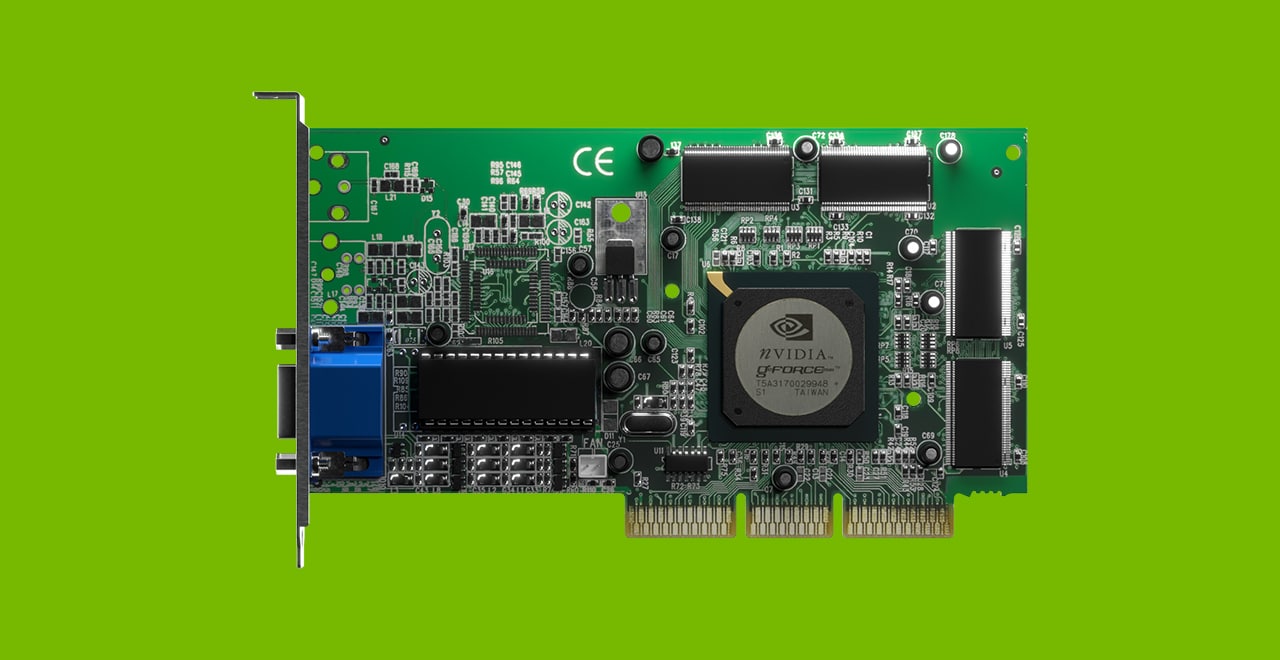

NVIDIA GeForce 256
The card NVIDIA launched in 1999 as 'the world's first GPU'. The phrase was marketing. The idea behind it, moving work from the processor to the graphics chip, is the one the AI era runs on.
- Maker
- NVIDIA
- Year
- 1999
- Category
- AI Hardware
- Associated with
- Jensen Huang
No public price
Value unproven
Relic Score
How we scoreA landmark by NVIDIA's own account and well dated by maker sources. No verified sale of one as a collectible was found.
The three questions we ask of every object
- Why is it rare?
- It is not. It was a mass-market retail card with no published production figure and no register of survivors. A boxed, complete, working example from the October 1999 release would be the uncommon one.
- What story does it tell?
- The card NVIDIA launched as 'the world's first GPU'. A marketing label on a games card became the name of the component the AI industry runs on.
- Why would someone want it in 2050?
- As the object that carried the word GPU into the world, by NVIDIA's own account. That appeal rests on a label that is the maker's claim, and on finding one in original condition.
In history
The record
DocumentedNVIDIA announced the GeForce 256 on 31 August 1999 and released it on 11 October 1999. A version with DDR memory followed on 13 December 1999. NVIDIA marketed the card as 'the world's first GPU' and still uses the phrase: its blog marked the 25th anniversary on 11 October 2024.
The card's NV10 chip was built on a 220nm process and the board carried 32MB of memory. Its key feature was hardware transform and lighting, which moved that work from the CPU to the graphics chip.
NVIDIA's anniversary post draws a direct line from this card to AlexNet's ImageNet win on NVIDIA GPUs in 2012.
The GeForce 256 has been out of production for more than two decades and can be found only second-hand. We collected no verified sale prices.
Why it matters
Editorial viewThe GeForce 256 matters less for what it did in 1999 than for the word it carried. 'GPU' was a marketing label on a games card. Twenty-five years later it is the name of the component the AI industry is built on, and NVIDIA tells its own history as a straight line from this board to AlexNet.
That is the precedent it sets for today's objects. An ordinary retail component, sold to people who wanted better graphics, turned out to name a category. Every argument now made for a GTX 580 or an H100 as an artefact follows the same pattern: the importance was assigned afterwards.
The limits are worth stating. 'First GPU' is NVIDIA's own claim. The card was mass-produced, no production figure is published, and nothing we read documents how many survive boxed or working.
Rarity
Not documentedNot published. NVIDIA has given no production figures, and there is no register of surviving cards. It was a mass-market retail product.
Classification
- First Edition
EvidenceMarketed by NVIDIA as 'the world's first GPU' and released on 11 October 1999, per NVIDIA's 25th-anniversary post.
What to look for
- 01Which version it is: the original card released on 11 October 1999, or the DDR version that followed on 13 December 1999. Sellers often do not say.
- 02The retail box, driver disc and manual. Loose cards pulled from old PCs are the norm.
- 03The brand on the board. The example pictured on Wikimedia Commons is a VisionTek card; decide whether you are collecting the chip or a particular maker's board.
- 04Working condition, shown rather than claimed.
What we could not confirm
No launch price was confirmed; the $199 figure often quoted has no source we could find. Transistor counts conflict: TweakTown says 23 million, Wikipedia's table says 17 million. The 'first GPU' label is NVIDIA's marketing and is disputed by some historians, a point we saw only in search results. The licence and author of the Wikimedia Commons photograph should be checked on its file page.
Sources
- [1]NVIDIA Blog: 25 years of the GeForce 256 (11 Oct 2024) · blogs.nvidia.com ↗
- [2]TweakTown: GeForce 256, the 'world's first GPU', is now 25 years old · tweaktown.com ↗
- [3]Wikipedia: GeForce 256 · en.wikipedia.org ↗
Record opened 24 Nov 2026 · Last verified 24 Nov 2026
More from NVIDIA
Company file →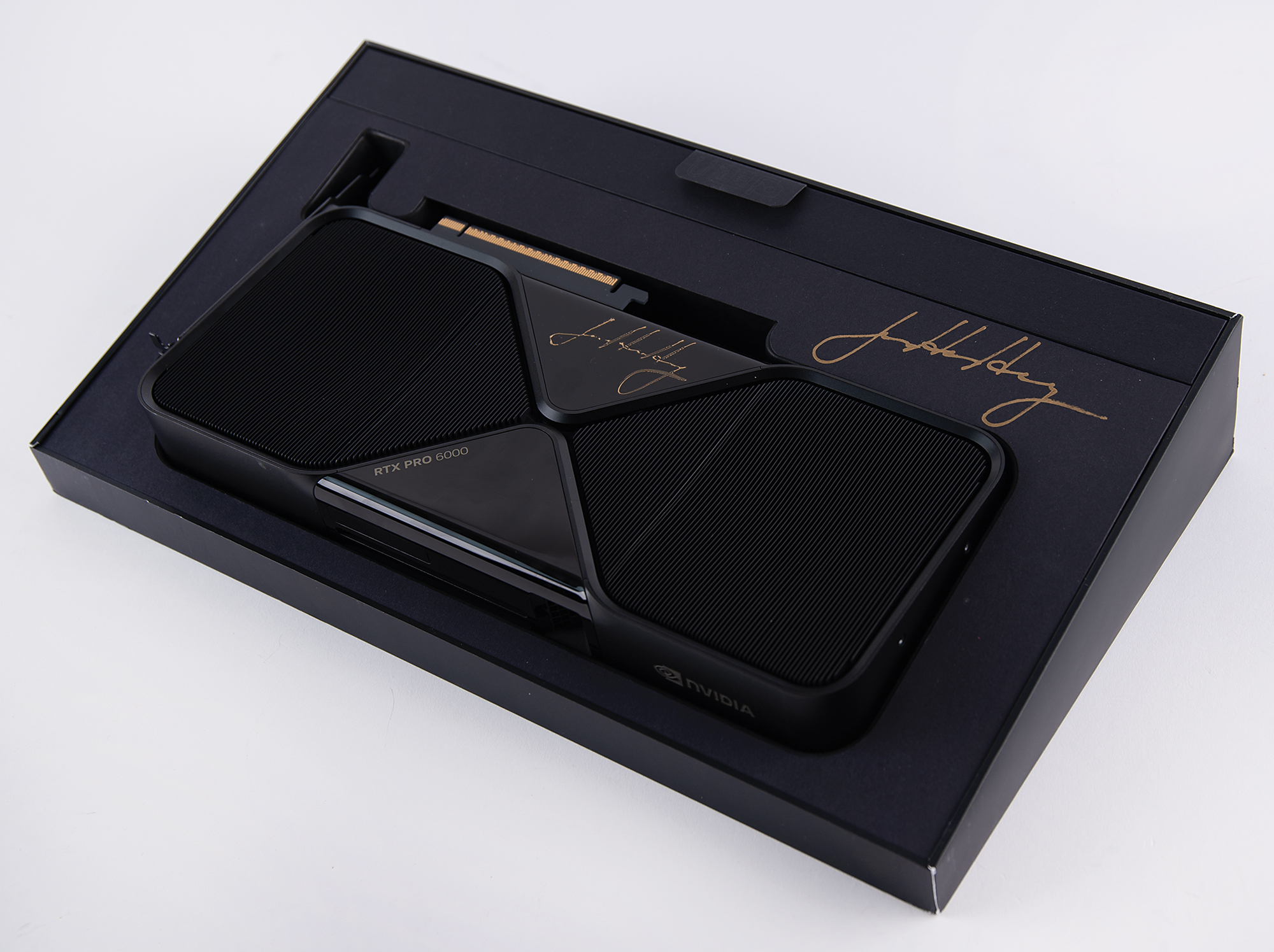 Photo: RR Auction
Jensen Huang twice-signed RTX Pro 6000 Blackwell
NVIDIA · 2026$57,450
Incl. premium · RR Auction · 20 Aug 2026
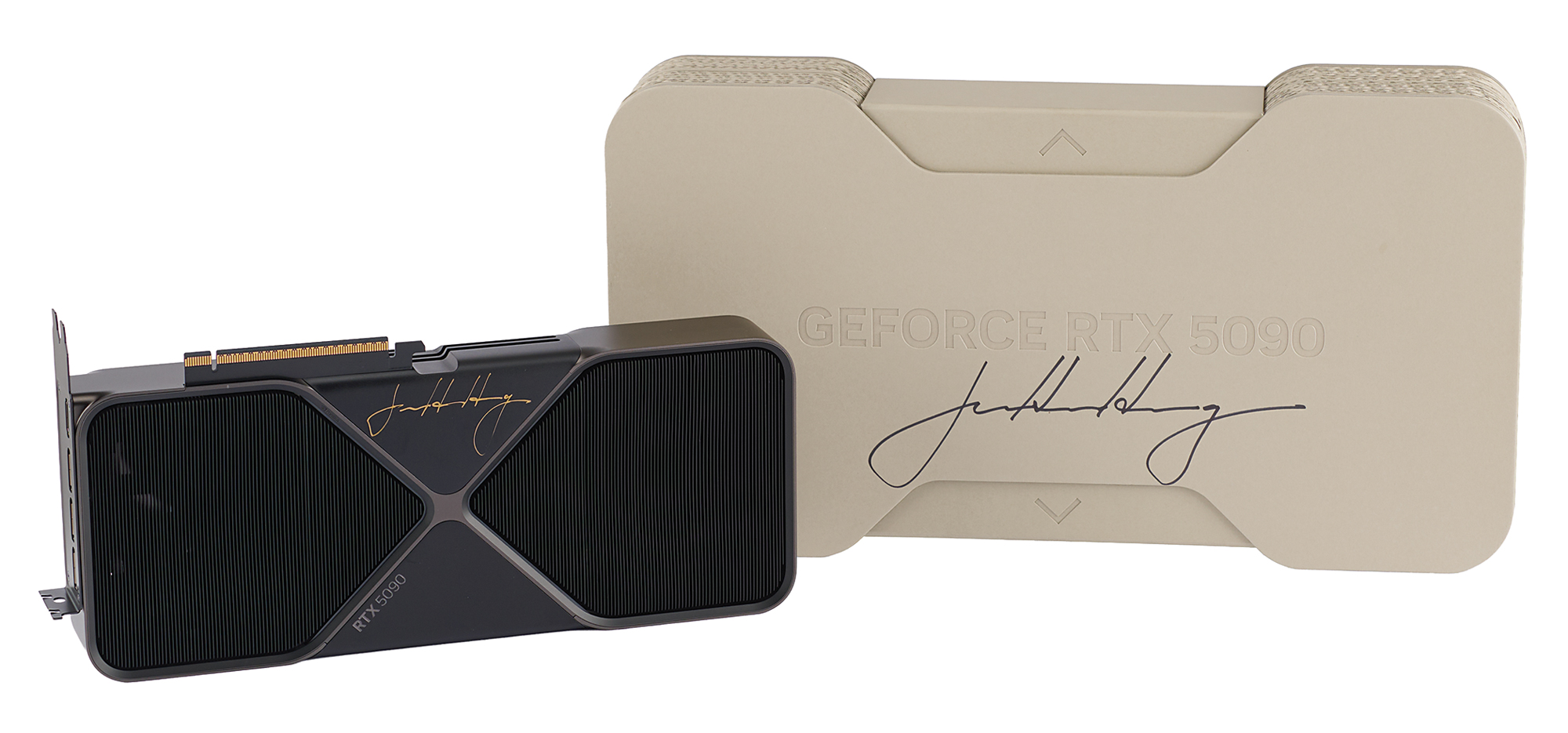 Photo: RR Auction
Jensen Huang signed GeForce graphics cards
NVIDIA$12,501
Incl. premium · RR Auction · 29 Jan 2026
 Photo: RR Auction
Jensen Huang signed photograph
NVIDIA$1,169
Incl. premium · RR Auction · 20 Aug 2026
 Photo: Sotheby's
Jensen Huang worn and signed Tom Ford leather jacket
Tom Ford · 2023$960,000
Reported · Sotheby's · 17 Jul 2026