Historic MomentsArtificial IntelligenceFlorence, Italy (presentation)
2012
AlexNet and the 2012 ImageNet breakthrough
The network that started the deep-learning boom was trained on two NVIDIA graphics cards in a bedroom. A museum has preserved the code. Nobody has documented the cards.
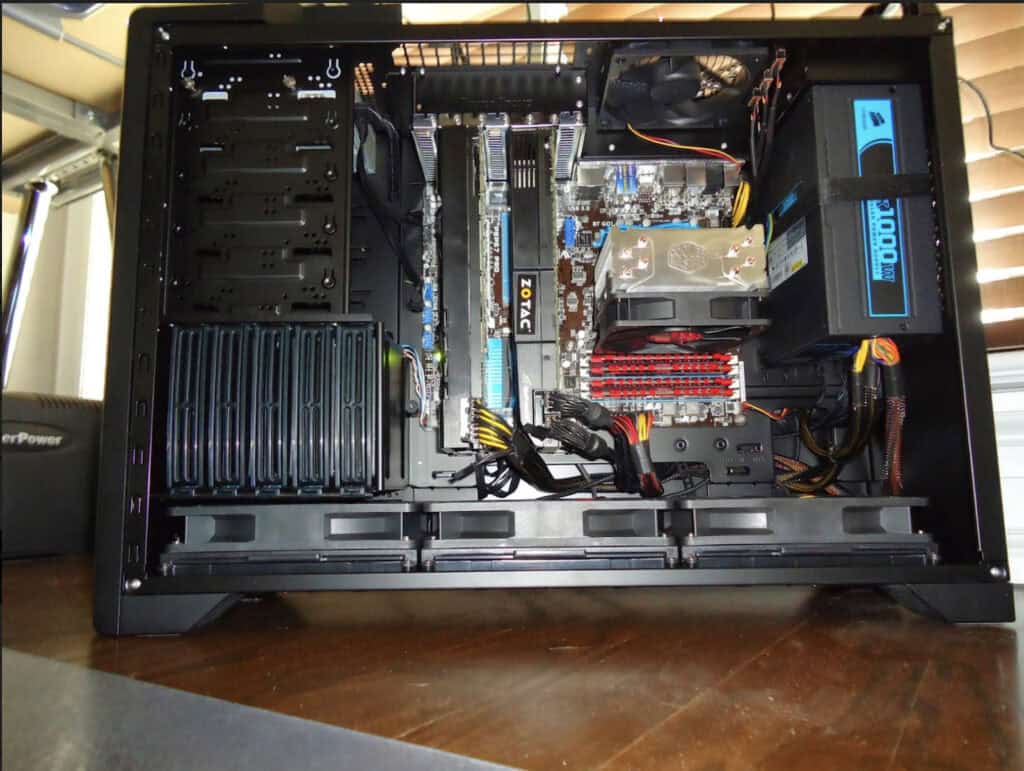 Photo: University of Toronto, via the Computer History Museum
What happened Documented
AlexNet, the neural network built by Alex Krizhevsky, Ilya Sutskever and Geoffrey Hinton, was published in autumn 2012 and presented by Krizhevsky in Florence (Computer History Museum). According to CHM it was trained 'on a computer with two NVIDIA graphics cards' in Krizhevsky's bedroom at his parents' house, over about a year of tuning and retraining.
On 20 March 2025 CHM, in partnership with Google, released the 2012 source code. Curator Hansen Hsu first contacted Krizhevsky in 2020, and the negotiation with Google, which owned the code through its purchase of DNNresearch, took five years. CHM quotes Hinton: 'Ilya thought we should do it, Alex made it work, and I got the Nobel Prize.' CHM also publishes what it calls a rare photograph of the bedroom computer, credited to the University of Toronto.
Why it matters Editorial view
CHM presents AlexNet as the starting point of the deep-learning boom, and NVIDIA's own history ties its AI business to this result. It is also a clear case of an event whose software was preserved and whose hardware was not documented.
The museum spent five years securing the code. Nobody, as far as we can find, has asked in public what happened to the two graphics cards. They were ordinary consumer parts, and that is exactly why they may not have survived: nothing about them looked historic at the time.
History used. Where is it now?
- 01Whereabouts unknown
Krizhevsky's home computer and its two NVIDIA graphics cards
Its roleTrained the network.
FR-0205 · in the catalogueNVIDIA GeForce GTX 580, the AlexNet GPUNo public price Photo: TheStriker / Wikimedia Commons, licence CC BY-SA 4.0
Whereabouts
Not publicly documented. CHM's post and IEEE Spectrum's article describe the machine and show one photograph, but neither says whether the computer or the cards survive, or who has them. CHM does not claim to hold them.
Open questions
- Does the PC, or either graphics card, still exist? Alex Krizhevsky, the University of Toronto and CHM's Hansen Hsu are the people to ask.
- The make and serial numbers of the two cards.
- Who took the bedroom photograph, and when.
- 02In a museum
The 2012 AlexNet source code
Its roleThe software that produced the result: a digital artefact, not a physical one.
IdentifiersCHM specifies the 2012 version and warns that other repositories named 'AlexNet' are recreations.
Whereabouts
Computer History Museum, which released it on 20 March 2025 at github.com/computerhistory/AlexNet-Source-Code.
Open questions
- Whether CHM also received any physical media, such as drives or notebooks, with the code.
What we could not confirm
The CHM and IEEE pages say 'two NVIDIA graphics cards' without naming the model. The GeForce GTX 580 is named in the AlexNet paper as summarised by Wikipedia, which we did not read at source. A Tom's Hardware piece quoting Jensen Huang on 'two GTX 580s in SLI' could be read only as a headline. The photograph is credited to the University of Toronto and reproduced with credit; its licence has not been cleared.
Sources
More moments in Artificial Intelligence
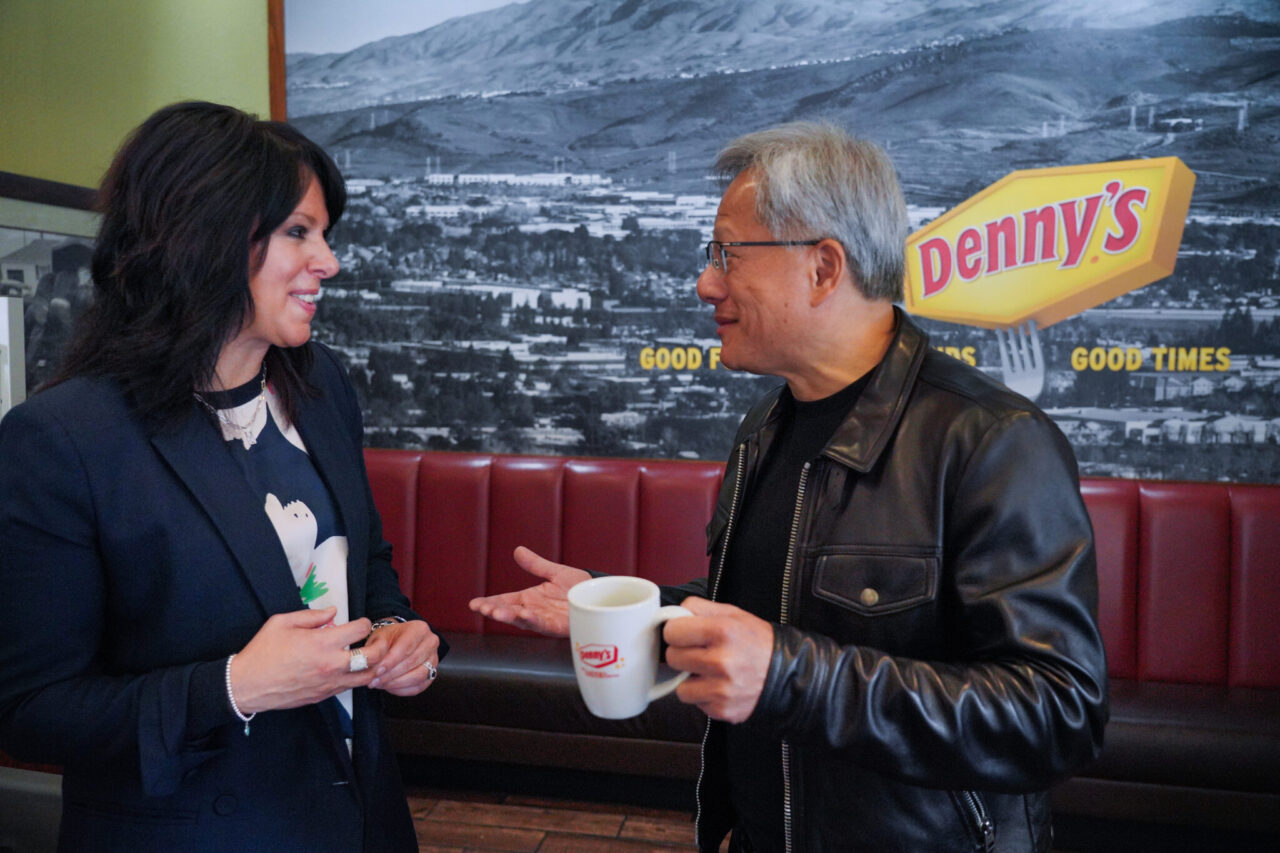 Photo: Don Feria/AP Images for Denny's, via NVIDIA
1993Artificial Intelligence
NVIDIA is planned in a booth at a Denny's in San Jose
Three engineers planned NVIDIA over coffee in a roadside diner. The booth is still there, with a plaque that came off the wall in November 2026 and was promised back days later.
2 objects traced
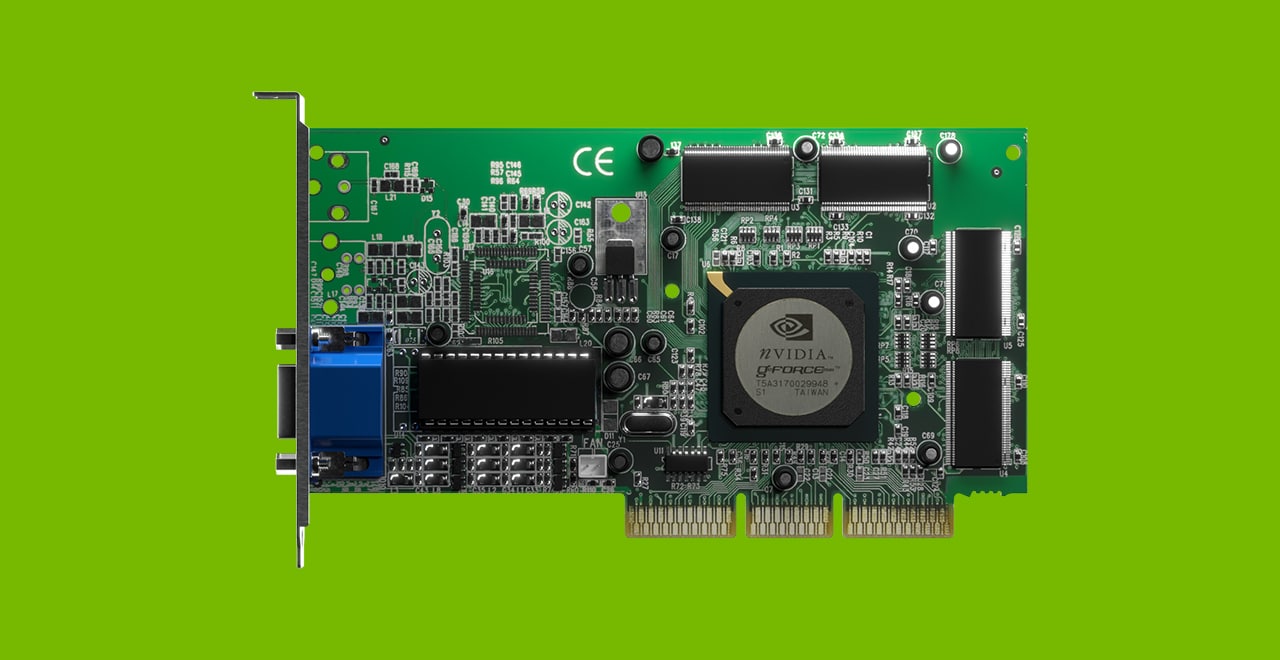 Photo: NVIDIA
11 Oct 1999Artificial Intelligence
NVIDIA launches the GeForce 256, 'the world's first GPU'
The card that gave the industry the word 'GPU' was a mass-market product. No single board with a documented part in the launch has ever been identified.
1 object traced · 1 whereabouts unknown
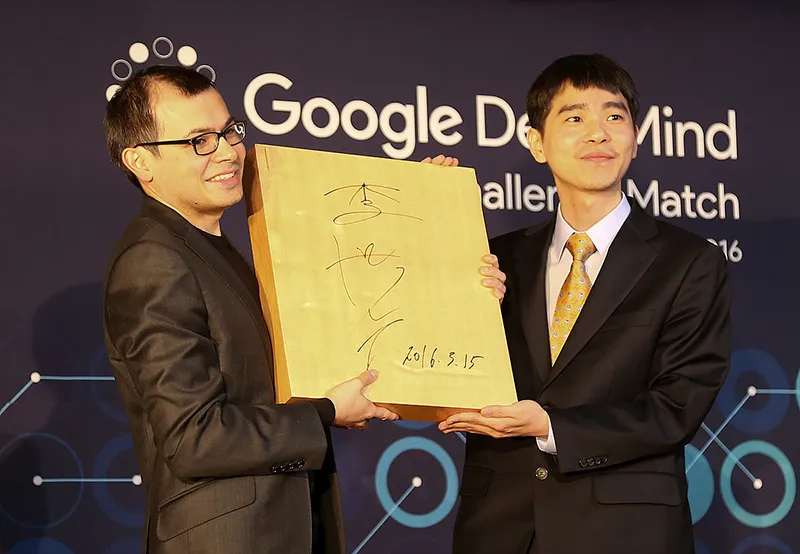 Photo: Google
Mar 2016Artificial Intelligence
AlphaGo defeats Lee Sedol in Seoul
The match that announced modern AI to the public left two objects of its own: a signed Go board and an honorary ninth-dan certificate. Neither has a published location.
2 objects traced · 2 whereabouts unknown