Historic MomentsArtificial IntelligenceStockholm, Sweden
9 Oct 2024
Demis Hassabis and John Jumper win the Nobel Prize in Chemistry
The first Nobel for an AI system's science came with a tradition: laureates give the Nobel Prize Museum an object. For once, the relics of an AI milestone were collected within days.
 Photo: Nobel Prize Outreach / Nanaka Adachi, via the University of Toronto (Geoffrey Hinton signing the museum's guest book; the chip is not shown)
What happened Documented
On 9 October 2024 the Nobel Prize in Chemistry was awarded to Demis Hassabis and John Jumper of Google DeepMind for AlphaFold, which predicts the 3D structure of proteins from their amino-acid sequences, and to David Baker for computational protein design (Google DeepMind). The AlphaFold 2 paper appeared in 2021, and DeepMind says more than 2 million researchers in 190 countries have used its predictions.
The prizes were presented in Stockholm in December 2024, during Nobel Week. By tradition, laureates give an object to the Nobel Prize Museum that week. The University of Toronto records that on 6 December 2024 Geoffrey Hinton, a laureate in physics that year, 'donated an early Boltzmann machine', a chip about the size of a postage stamp.
Why it matters Editorial view
This is the one AI milestone in our list for which a museum set out to collect objects from the people involved, within days of the event. That is the reverse of the usual pattern, in which relics are recognised decades later and found, if at all, in a garage.
What the two AlphaFold laureates gave has not yet been confirmed on the museum's own pages. If the reports are right, the relics of this prize are not hardware at all but personal tokens, which says something about where the history of this work sits: in people and teams rather than machines.
History used. Where is it now?
- 01Whereabouts unknown
The objects Hassabis and Jumper gave to the Nobel Prize Museum
Its roleBy tradition each laureate gives the museum an object during Nobel Week.
Whereabouts
Not confirmed. Search-result summaries of the museum's catalogue describe gifts from both laureates, but the catalogue pages refused automated reading and we have not seen them.
Open questions
- Search results describe an origami paper crown passed round John Jumper's team as a prize for good work (museum catalogue item 38899). Confirm it on the museum's catalogue.
- Search results describe chess pieces given by Demis Hassabis (catalogue item 38900), and possibly a photograph and a cube. Confirm exactly what was given.
- Are they on display?
- 02In a museum
Early Boltzmann machine chip donated by Geoffrey Hinton
Its roleGiven to the museum by the physics laureate during the same Nobel Week, on 6 December 2024. A neighbouring object, not part of the chemistry prize.
FR-0505 · in the catalogueGeoffrey Hinton's early Boltzmann machine chipNo public priceFR-0505No licensed photograph yetWhereabouts
Nobel Prize Museum, Stockholm, according to the University of Toronto's photo report of 13 December 2024.
Open questions
- Its inventory number, reported in search results as 2024.018.001.
- The chip's date and maker.
- A photograph of the object itself from the museum.
- 03Whereabouts unknown
The Nobel medals and diplomas of Hassabis and Jumper
Its rolePresented at the ceremony.
Whereabouts
Not documented in any source we read.
Open questions
- Where the hardware that trained AlphaFold 2 is now. Google DeepMind and the Science Museum in London are the places to ask.
What we could not confirm
nobelprize.org and the Nobel Prize Museum's catalogue refused every automated request, so the Jumper and Hassabis donations rest on search-result summaries of those pages and are not stated here as fact. The ceremony date, traditionally 10 December, and the official citation were not read on a primary page. The photograph is a Nobel Prize Outreach image reproduced with credit; its licence has not been cleared.
Sources
More moments in Artificial Intelligence
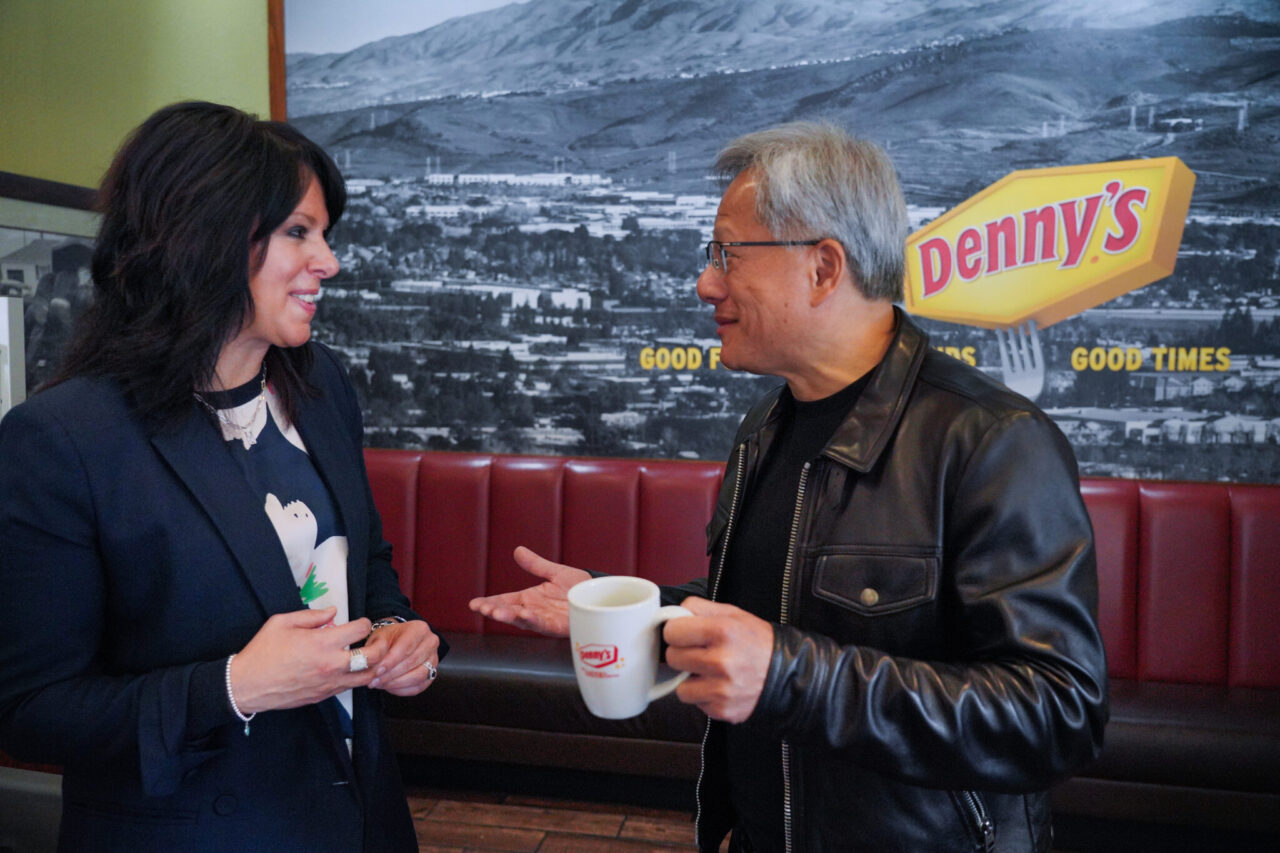 Photo: Don Feria/AP Images for Denny's, via NVIDIA
1993Artificial Intelligence
NVIDIA is planned in a booth at a Denny's in San Jose
Three engineers planned NVIDIA over coffee in a roadside diner. The booth is still there, with a plaque that came off the wall in November 2026 and was promised back days later.
2 objects traced
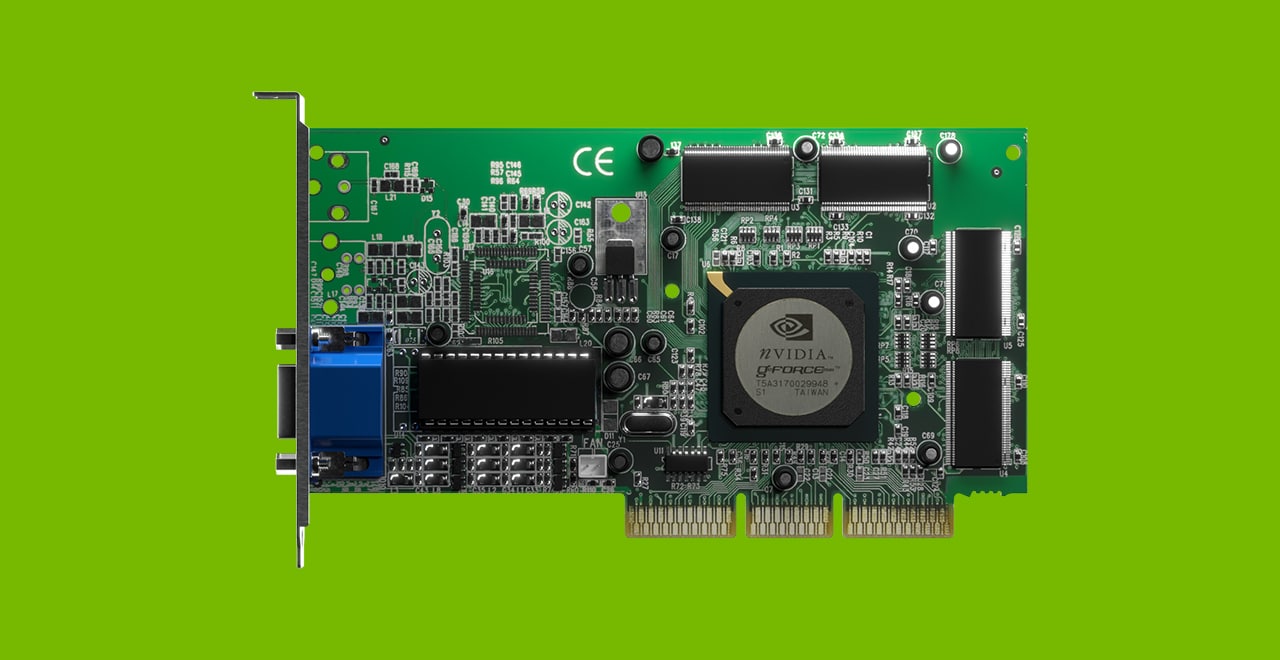 Photo: NVIDIA
11 Oct 1999Artificial Intelligence
NVIDIA launches the GeForce 256, 'the world's first GPU'
The card that gave the industry the word 'GPU' was a mass-market product. No single board with a documented part in the launch has ever been identified.
1 object traced · 1 whereabouts unknown
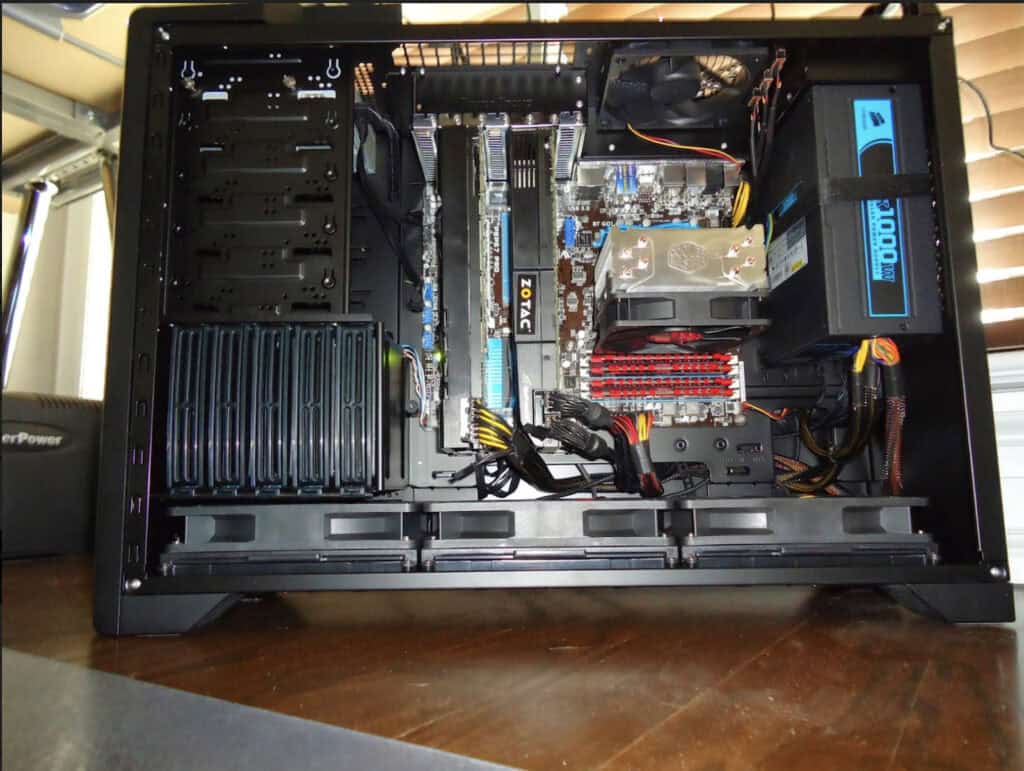 Photo: University of Toronto, via the Computer History Museum
2012Artificial Intelligence
AlexNet and the 2012 ImageNet breakthrough
The network that started the deep-learning boom was trained on two NVIDIA graphics cards in a bedroom. A museum has preserved the code. Nobody has documented the cards.
2 objects traced · 1 whereabouts unknown