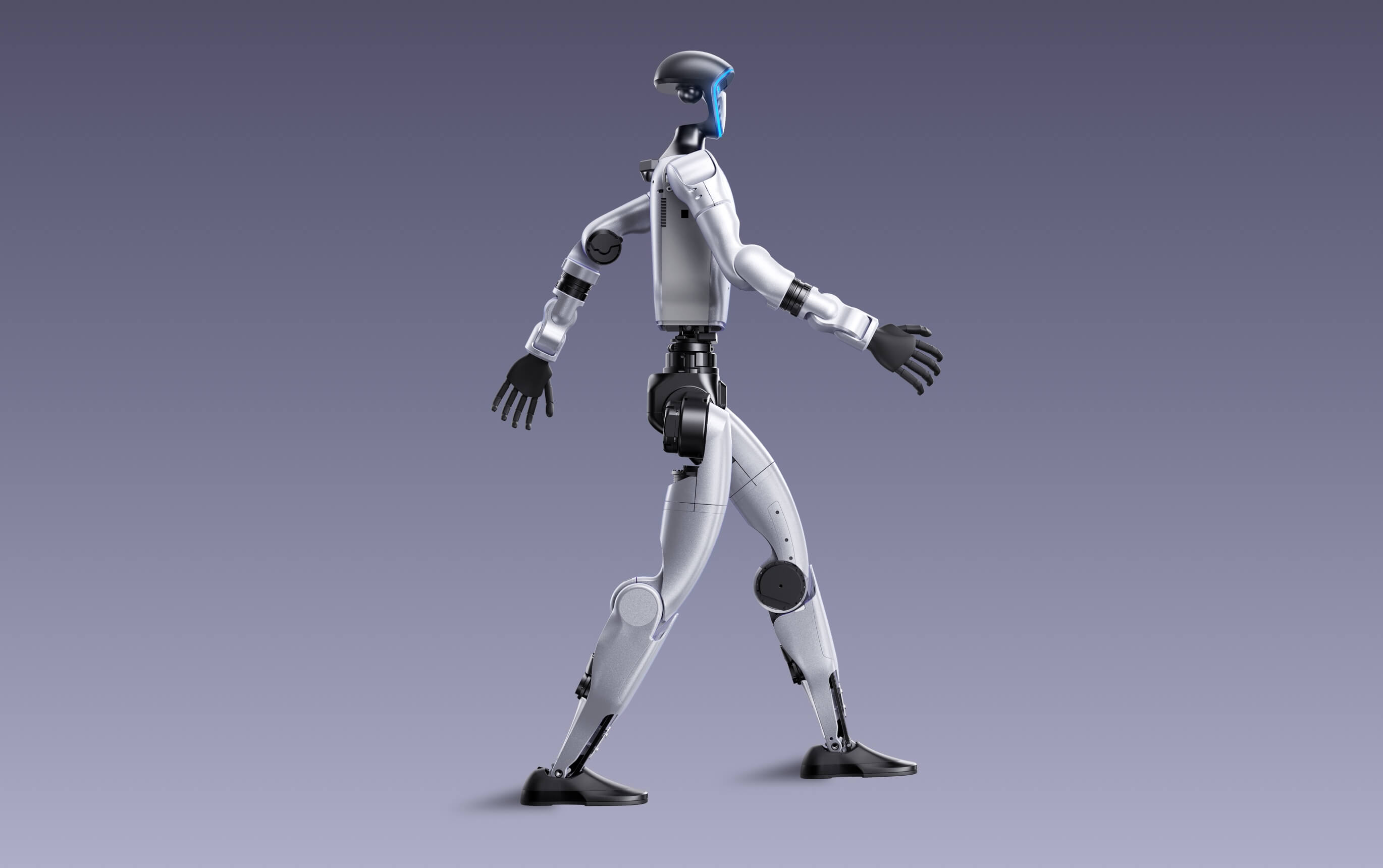
 Photo: Unitree Robotics
Photograph © Unitree Robotics. Original ↗
Unitree G1
A humanoid robot with a published price that an individual can order. Most of Unitree's humanoid revenue comes from laboratories that modify robots and wear them out, which is the whole argument.
- Maker
- Unitree
- Year
- 2024
- Category
- Robotics
from $13,500 (tax and shipping excluded)
Status unverified · Unitree
Relic Score
How we scoreA clear threshold with a maker's price page and filed sales figures behind it. On open sale, with no secondary market on record.
The three questions we ask of every object
- Why is it rare?
- It is not. It is in production and on open sale, and Unitree publishes no per-model figures. An early 2024 unit kept boxed, complete and unmodified would rank higher, since most go to laboratories that modify them and wear them out.
- What story does it tell?
- On our reading, the first humanoid robot with a published price that an individual could simply order: $16,000 at launch in May 2024.
- Why would someone want it in 2050?
- As the point at which a humanoid became something a person could buy. That holds only for an example that survives unmodified with its original paperwork, and the 'first' is our reading, not Unitree's claim.
The record
DocumentedThe G1 is a compact humanoid robot from Unitree Robotics. Unitree showed it at the ICRA robotics conference in May 2024, and The Robot Report gave a list price of $16,000 for the base configuration on 15 May 2024. On 24 November 2026 Unitree's own page listed it 'from $13.5K', excluding tax and shipping, with the G1 EDU research version priced on request.
Unitree's published specifications give a standing height of 1,320mm (690mm folded), a weight of about 35kg with battery, 23 degrees of freedom (23 to 43 on the EDU) and about two hours of battery life from a 13-string lithium pack.
Unitree does not publish sales by model. Its March 2026 IPO filing for the STAR Market, as analysed by The Robot Report, shows the company produced 3,701 humanoids of all types and sold 3,551 in the first nine months of 2025. Humanoids made up 51.5% of core revenue, and the average selling price of a Unitree humanoid fell from about $85,000 in 2023 to about $25,000. In that period 73.6% of humanoid revenue came from research and education buyers.
Why it matters
Editorial viewHumanoid robots have been famous for decades and unavailable for all of them. Honda's ASIMO, announced in 2000, was never sold. Most of the G1's contemporaries are supplied to factories and warehouses under contract, with no public price. The G1 is different in one simple way: the maker's website states a figure, and an individual can place an order. On the evidence we have gathered it is the first humanoid of which that can be said, though that is our reading and not a claim Unitree makes.
The filing matters as much as the robot. It is rare to have filed numbers for a robot maker, and these show a real business: thousands of humanoids a year, at a falling average price. They also show who is buying. Nearly three quarters of humanoid revenue came from research and education, which means most of that money buys machines for laboratories, to be opened, reprogrammed and run until they break.
The limit is that none of this is specific to the G1. Unitree does not say how many G1s exist, and the model is still on sale.
Rarity
Not documentedUnitree publishes no per-model figures. Company-wide, its IPO filing (via The Robot Report) records 3,551 humanoids sold in the first nine months of 2025. The G1 is in production and on open sale, so it is not scarce. Any scarcity would come later, from how few survive boxed, complete and unmodified, and that is an argument, not a fact.
What to look for
- 01A dated invoice from Unitree or a named distributor. For a 2024 unit, bought near the $16,000 list price reported that May, the invoice is the proof: a serial number alone will not show it.
- 02The base G1 as shipped, with its original battery, charger, packaging and paperwork.
- 03Unmodified hardware. Research buyers are the main customers, and laboratory robots are bought to be altered.
- 04Which variant it is. Unitree lists 23 degrees of freedom for the G1 and 23 to 43 for the EDU; a seller should be able to say exactly what was ordered.
Is the first humanoid anyone can simply order worth keeping in its box?
What follows is Future Relics’ editorial opinion. It is an argument about cultural significance, not a price forecast. We may be wrong, and we keep our old theses online when we are.
Probably, for a very small number of examples, and not for the reason people expect.
The claim is that the G1 marks the moment a humanoid robot became an ordinary purchase: a published price, an order page, delivery to an individual. That is a real threshold, and it is the kind that looks obvious afterwards. Sony's first AIBO crossed the same line for robot pets in 1999, and M+ in Hong Kong now holds one.
The strongest objection is that the AIBO ERS-110 was a run of 5,000 and the G1 is an open-ended product whose price keeps falling. Unitree sold 3,551 humanoids in nine months of 2025, and the G1 is listed for less now than at launch. Nothing about it is scarce, and there is every reason to expect its successors to be better and cheaper. A collector who buys one today is buying a current product at retail.
The argument that survives is about attrition. These robots are bought to be worked. Most of Unitree's humanoid revenue comes from research and education buyers, who open them, reprogram them and run them until something breaks. Batteries age and software moves on. It is reasonable to expect that few 2024 units will survive boxed, complete and unmodified, but that is an expectation, not a fact, and nobody has counted.
So the thesis is narrow. Not 'buy a G1', but: an early base-model G1 with a 2024 invoice, original packaging and untouched hardware is the example that could stand for the moment. Everything else is a robot.
Precedents
- Sony AIBO ERS-110 (1999): 5,000 units, of which the 3,000 for Japan sold out in 20 minutes according to Sony. A consumer robot with a documented run, now held by M+ in Hong Kong. We found no verified auction price for one.
- Honda ASIMO (2000): never offered for sale, so there is nothing to collect. Availability, not fame, is what creates an object.
- Tesla Roadster (2008): about 2,450 built, and the recorded sales are of early Signature One Hundred cars, such as no. 38 at a final bid of $182,000 in 2021. In a production run, the sales on record are of the documented early examples.
What would prove us wrong
- It is an open-ended product still on sale, at a lower price than at launch. Unitree sold 3,551 humanoids across its range in nine months of 2025.
- Unitree publishes no per-model numbers and, as far as we found, no first-batch or serial documentation, so an 'early' G1 rests entirely on the buyer's invoice.
- The robot remembered as the first household humanoid may be a different one: a cheaper Unitree, a 1X NEO, or something not yet shipped.
- Long-term function is unknown. We collected no sourced information on battery replacement, firmware support or what the robot does without its maker's software.
How to acquire
Ordered directly from Unitree: from $13,500 for the base G1 on 24 November 2026, tax and shipping excluded. The page did not show stock or lead time. EDU versions are sold through a sales contact. We did not check country-specific restrictions on purchase or import. A 2024 unit would have to come from its first owner, with the invoice.
How to preserve
We collected no sourced preservation information for the G1, so what follows is general advice. The robot runs on a lithium battery pack (13-string, about two hours per charge by the official specification), and lithium packs age whether used or not: ask the maker for storage guidance and do not leave one fully charged or flat for years. Keep the packaging, charger, accessories and paperwork together, and record the software version it arrived with. Whether a G1 remains usable without continuing software support from Unitree is not something we could establish.
Where it stands
- Unitree ↗
Price as listed on the official page; lead time and stock not shown. G1 EDU on request.
from $13,500 (tax and shipping excluded)Status unverifiedChecked 24 Nov 2026
Asking prices and stock are as observed on the date shown and change without notice. Future Relics does not sell these objects and currently earns no commission on these links.
What we could not confirm
The Robot Report's 2024 article gives the G1's weight as about 47kg; Unitree's page says about 35kg. The filing figures cover all Unitree humanoids, not the G1 alone, and reach us through The Robot Report's analysis. That the G1 was the first humanoid an individual could order at a published price is our reading, not a documented claim. Figures were taken from summarised readings of the sources and should be checked against the originals.
Sources
- [1]Unitree: G1 official page · unitree.com ↗
- [2]The Robot Report: Unitree unveils G1 humanoid for $16K (15 May 2024) · therobotreport.com ↗
- [3]The Robot Report: Unitree IPO shows a real hardware business (25 Mar 2026) · therobotreport.com ↗
Record opened 24 Nov 2026 · Last verified 24 Nov 2026
More from Unitree
Company file →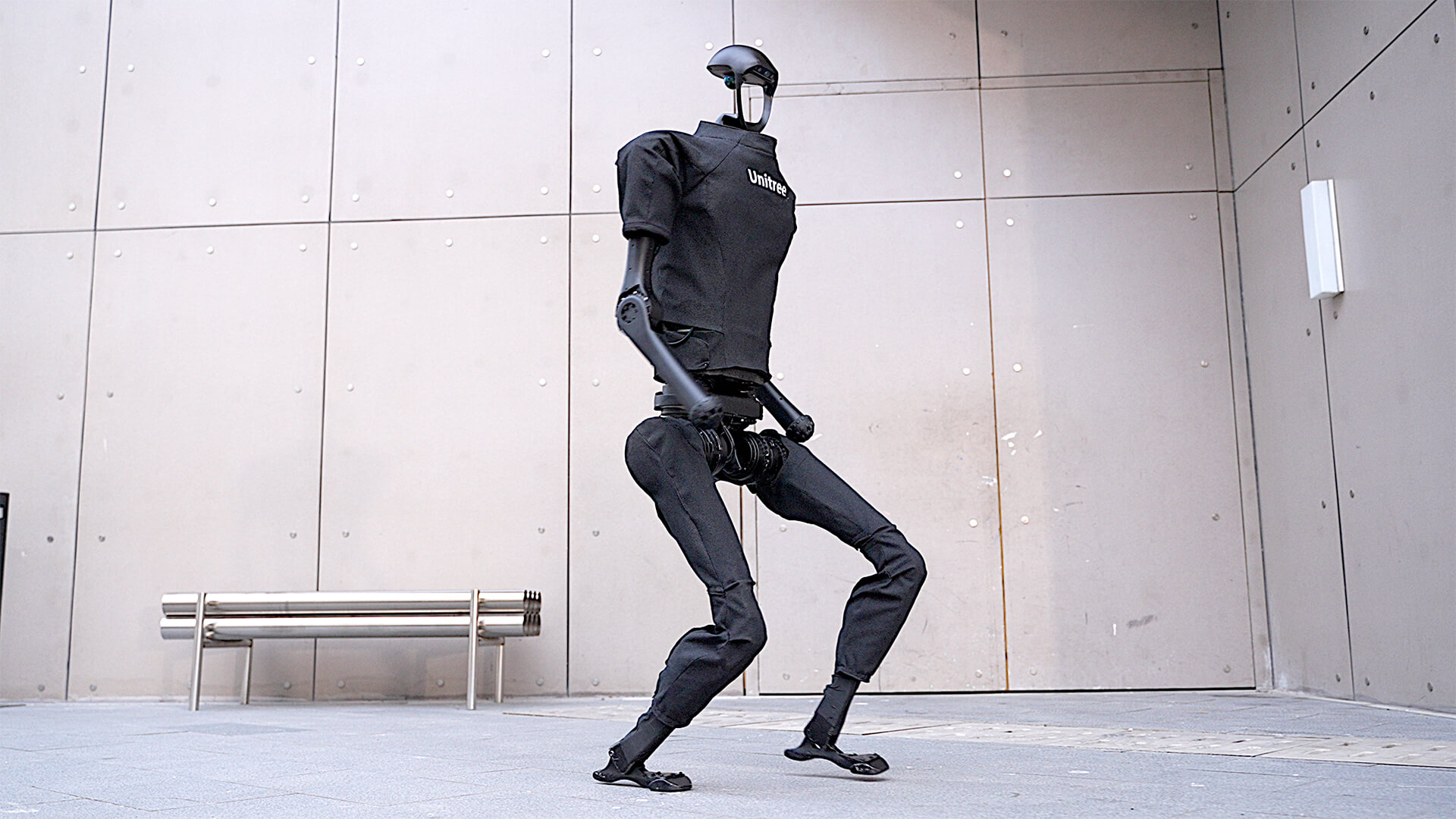 Photo: Unitree Robotics
Unitree H1
Unitree · 2023$90,000 base price (reported May 2024)
Status unverified · Unitree
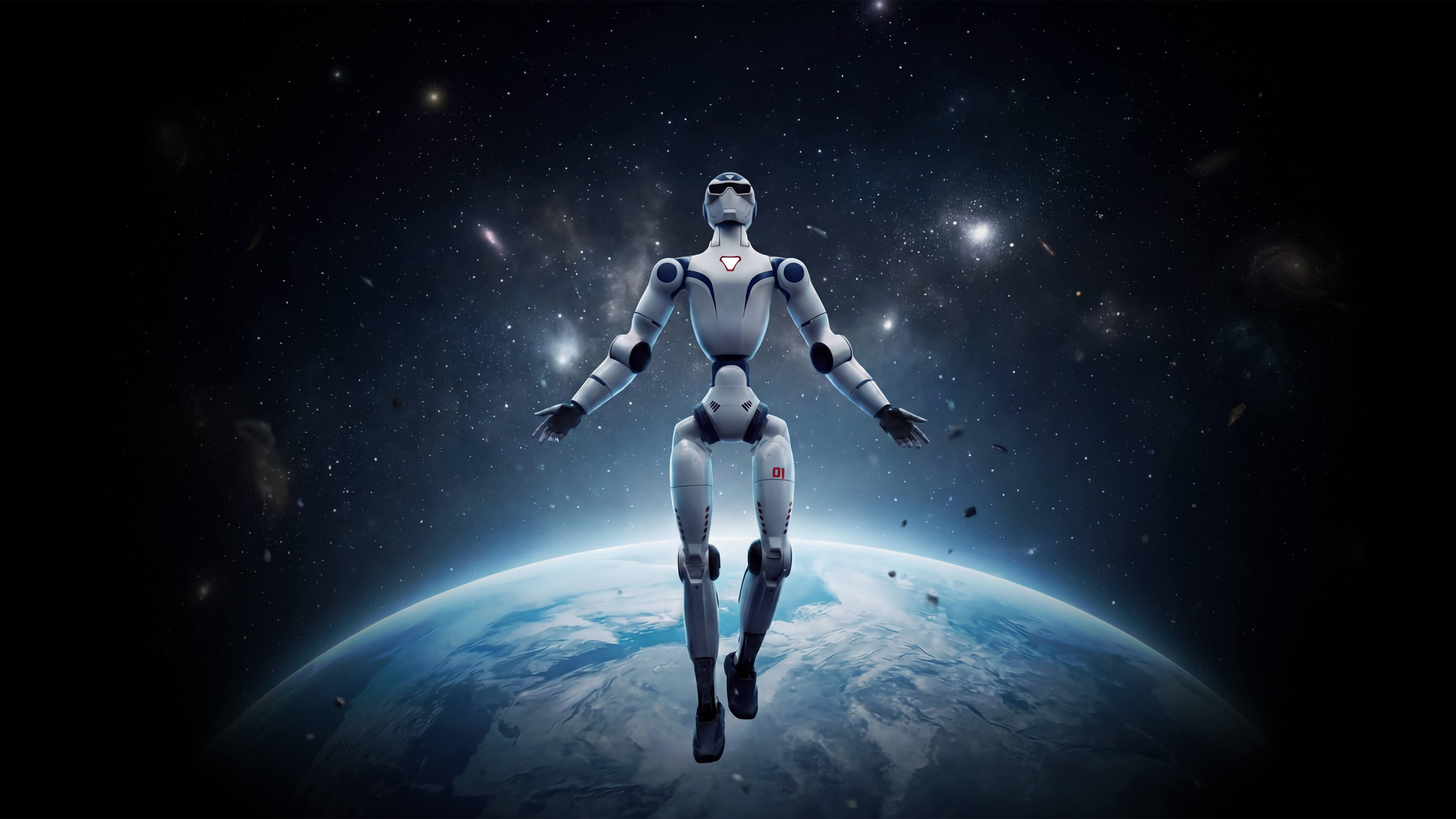 Photo: Unitree Robotics
Unitree R1
Unitree · 2025R1 Air $4,900; R1 $5,900 (tax and shipping excluded)
Status unverified · Unitree
 Photo: Unitree Robotics
Unitree Go2
Unitree · 2023Air $1,600; Pro $2,800; X $4,500 (tax and freight excluded)
Status unverified · Unitree