 Photo: Unitree Robotics
Photograph © Unitree Robotics. Original ↗
Unitree R1
A humanoid robot listed at $4,900. If humanoids ever become ordinary household goods, this is a price at which it could start. The evidence for anything more is thin.
- Maker
- Unitree
- Year
- 2025
- Category
- Robotics
R1 Air $4,900; R1 $5,900 (tax and shipping excluded)
Status unverified · Unitree
Relic Score
How we scoreA striking price and very little else on record: one maker page, no dates, no numbers, no sales.
The three questions we ask of every object
- Why is it rare?
- It is not. It is a current product on open sale and Unitree publishes no figures. An early example kept boxed, complete and unmodified might stand apart later, which is an argument and not a fact.
- What story does it tell?
- One number: a humanoid robot listed at $4,900 in November 2026, against $90,000 reported for Unitree's full-size H1 in May 2024.
- Why would someone want it in 2050?
- Only if humanoids become household goods and this is remembered as the price at which that began. The evidence so far is one product page, so the honest answer is that probably few will.
The record
DocumentedThe R1 is the lowest-priced humanoid robot in Unitree Robotics' range. On 24 November 2026 Unitree's official page listed the R1 Air at $4,900 and the R1 at $5,900, tax and shipping excluded, with an R1 EDU research version priced on request.
By Unitree's specifications it stands 1,230mm tall and weighs about 27kg (Air) or 29kg with battery. The Air has 20 degrees of freedom, the R1 has 26 and the EDU between 26 and 40.
The page did not show stock or lead time. Unitree publishes no sales figures for the model.
Why it matters
Editorial viewThe R1 matters for one number. Unitree's full-size H1 was reported at $90,000 in May 2024, the month the G1 arrived at $16,000. The R1 Air was listed at $4,900 in November 2026. Across three models the price of the cheapest Unitree humanoid fell by almost 95 per cent, into the range of a household purchase.
Sony's first AIBO, a run of 5,000 in 1999, saw its Japanese allocation of 3,000 sell out in 20 minutes: proof that people will pay for a robot with no job. The R1 asks the same question of a humanoid.
What we cannot say is much else. Everything in this record about the R1 itself comes from Unitree's own product page. We have no confirmed launch date, no production figure and no independent account of what the robot can do.
Rarity
Not documentedNot published. The R1 is a current product on open sale, and Unitree gives no production or sales figures for it. Any future scarcity would lie in early examples kept boxed, complete and unmodified, which is an argument and not a documented fact.
What to look for
- 01An invoice showing the purchase date and the exact variant: R1 Air (20 degrees of freedom) or R1 (26).
- 02The earliest units. The launch date itself is not confirmed in our sources, so the paperwork has to carry the claim.
- 03Original packaging, battery and charger, and unmodified hardware.
- 04The full landed cost. The listed prices exclude tax and shipping.
Does a $4,900 price make the Unitree R1 the humanoid that history will remember?
What follows is Future Relics’ editorial opinion. It is an argument about cultural significance, not a price forecast. We may be wrong, and we keep our old theses online when we are.
Possibly, and the evidence is too thin to say more than that.
The case for the R1 is the price. Objects that mark the arrival of a technology in ordinary homes are usually the affordable ones, not the best ones. A humanoid at $4,900 is priced like a household purchase, not a laboratory one, and if humanoids do become common, people will look back for the model that made that possible.
The case against is everything else. We know almost nothing about it beyond the maker's product page: no confirmed launch date, no numbers, no independent reporting that we read in full. Unitree's humanoid prices have fallen with each model, so there is no reason to assume this is the floor. And the G1, which came first and has the filing data behind it, has the better claim to being the threshold.
If there is a thesis, it is the same narrow one as for the G1: a first-production R1 with its invoice, kept boxed and unmodified, would be the example worth having. It rests on the expectation that cheap robots are used hard and discarded, so few survive intact. That expectation is reasonable. It is not a fact, and for this model we cannot even date the first unit.
Precedents
- Sony AIBO ERS-110 (1999): 5,000 units, with the 3,000 for Japan sold in 20 minutes by Sony's account. A robot bought for the home with a documented first run, which is what the R1 lacks.
- Unitree G1 (2024): listed at $16,000 at launch and from $13,500 in November 2026. The earlier model, with better evidence, and the more likely marker of the same moment.
- Unitree H1: reported base price of $90,000 in May 2024. The measure of how far the R1's price has fallen, and a reminder that each Unitree humanoid has been undercut by the next.
What would prove us wrong
- The evidence is a single product page. No launch date, production figure or independent review was confirmed in our research.
- A cheaper or more capable successor would make the R1 an intermediate step. Unitree's prices have fallen with every model.
- At this price the robots are likely to be treated as disposable, so provenance will be poor: a robot without paperwork cannot be shown to be early.
- Long-term function is unknown. We have no sourced information on batteries, firmware or dependence on Unitree's software.
How to acquire
Ordered from Unitree: R1 Air at $4,900 and R1 at $5,900 on 24 November 2026, tax and shipping excluded, with the EDU on request. Stock and lead time were not shown. One outlet seen in search results cautions that advertised prices may apply only to particular markets, which we did not verify.
How to preserve
We collected no sourced preservation information for the R1, so this is general advice. It is a battery-powered machine: treat the battery as the first thing to age, and follow the maker's storage guidance. Keep the box, charger, accessories and paperwork together and note the software version it arrived with. Whether it stays usable without continuing software support from Unitree is not established.
Where it stands
- Unitree ↗
Official listed prices; stock and lead time not shown. R1 EDU on request.
R1 Air $4,900; R1 $5,900 (tax and shipping excluded)Status unverifiedChecked 24 Nov 2026
Asking prices and stock are as observed on the date shown and change without notice. Future Relics does not sell these objects and currently earns no commission on these links.
What we could not confirm
The R1's debut in July 2025 at 39,999 yuan, reported by the South China Morning Post, was seen in search results only, as was a caution that advertised prices may apply to particular markets. The year given for this record rests on that unconfirmed report. Everything else about the R1 comes from Unitree's product page as read, in summarised form, on 24 November 2026.
Sources
- [1]Unitree: R1 official page · unitree.com ↗
- [2]Unitree: G1 official page · unitree.com ↗
- [3]The Robot Report: Unitree unveils G1 humanoid for $16K, with H1 base price of $90,000 (15 May 2024) · therobotreport.com ↗
Record opened 24 Nov 2026 · Last verified 24 Nov 2026
More from Unitree
Company file →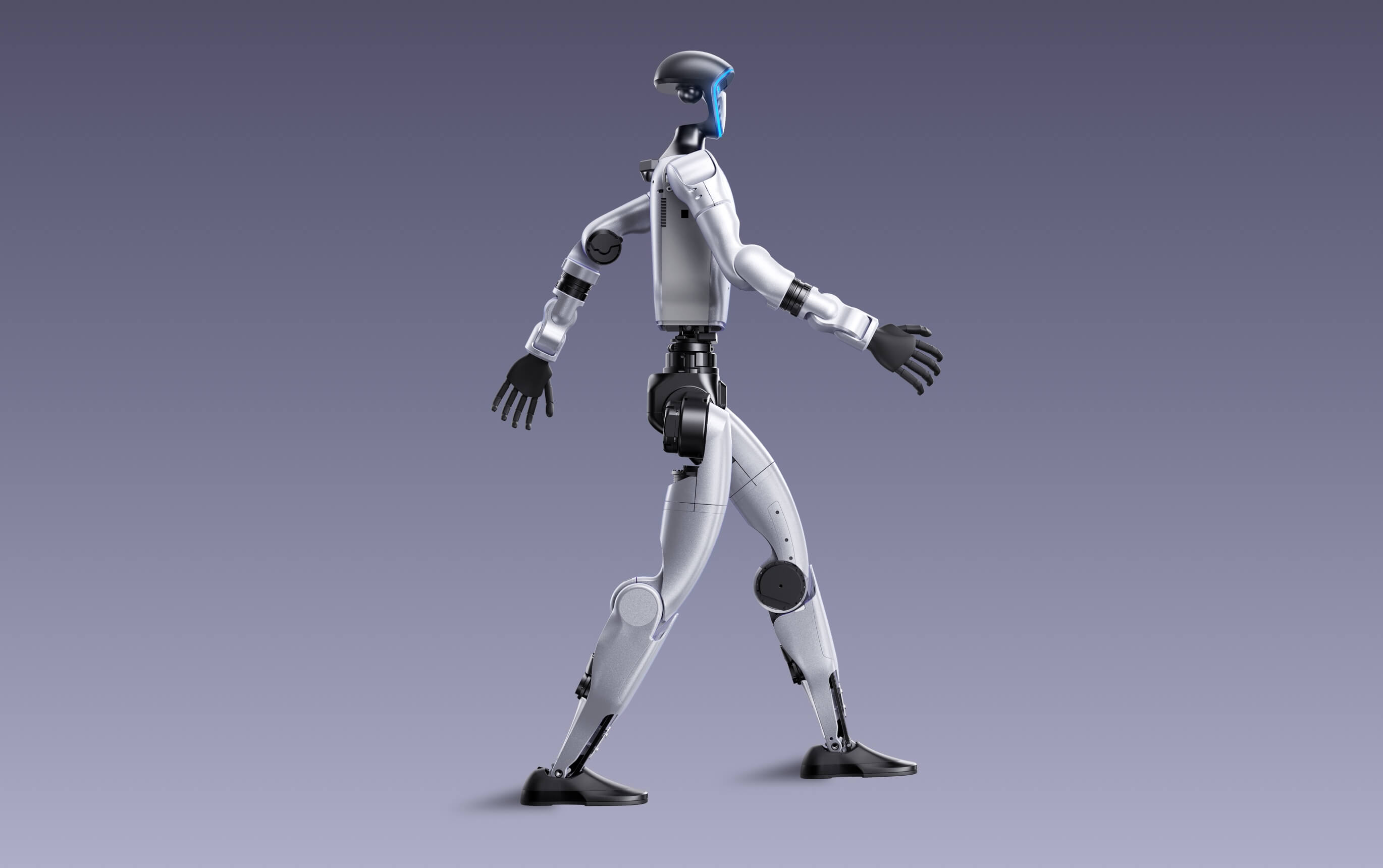 Photo: Unitree Robotics
Unitree G1
Unitree · 2024from $13,500 (tax and shipping excluded)
Status unverified · Unitree
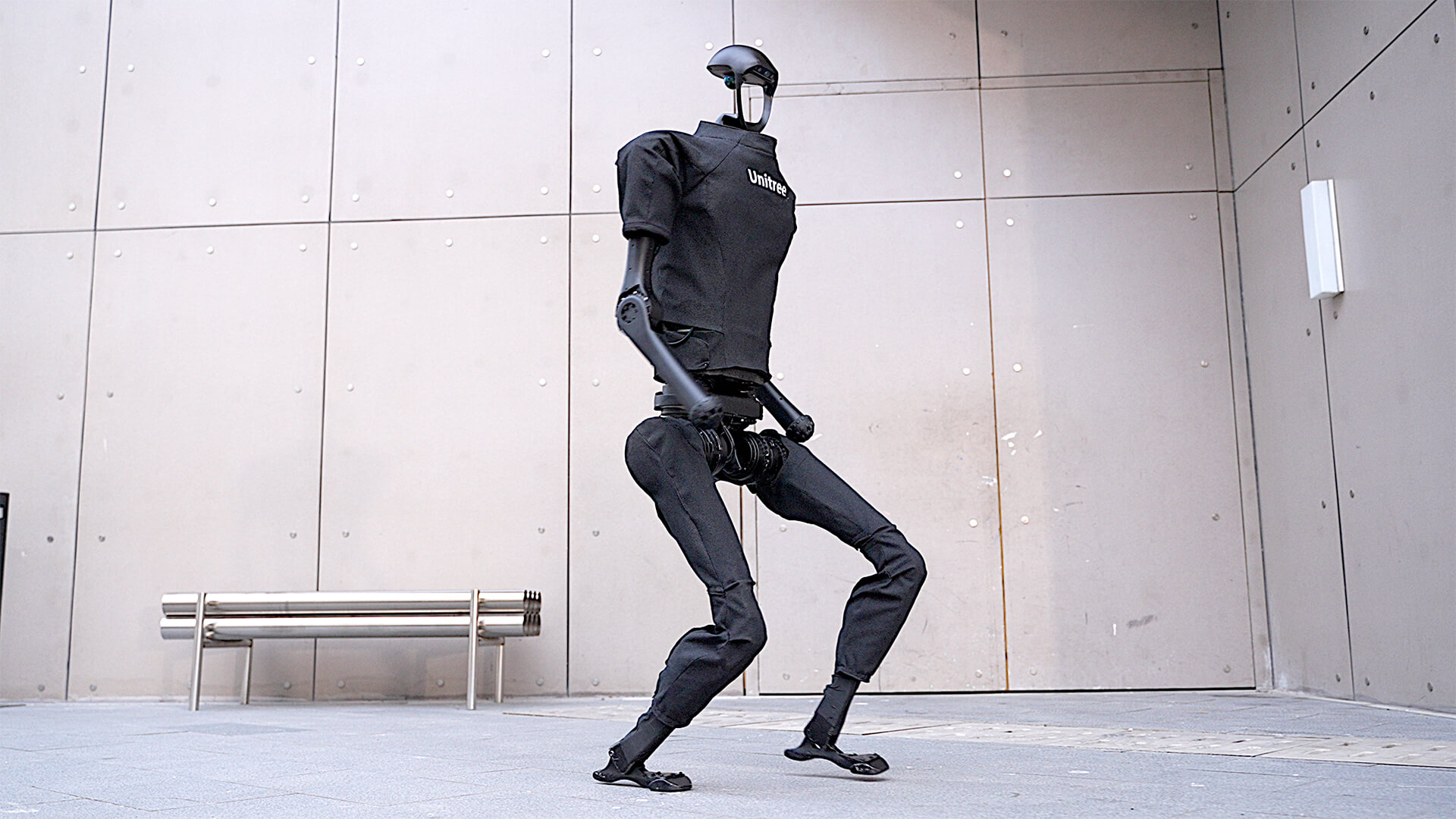 Photo: Unitree Robotics
Unitree H1
Unitree · 2023$90,000 base price (reported May 2024)
Status unverified · Unitree
 Photo: Unitree Robotics
Unitree Go2
Unitree · 2023Air $1,600; Pro $2,800; X $4,500 (tax and freight excluded)
Status unverified · Unitree